
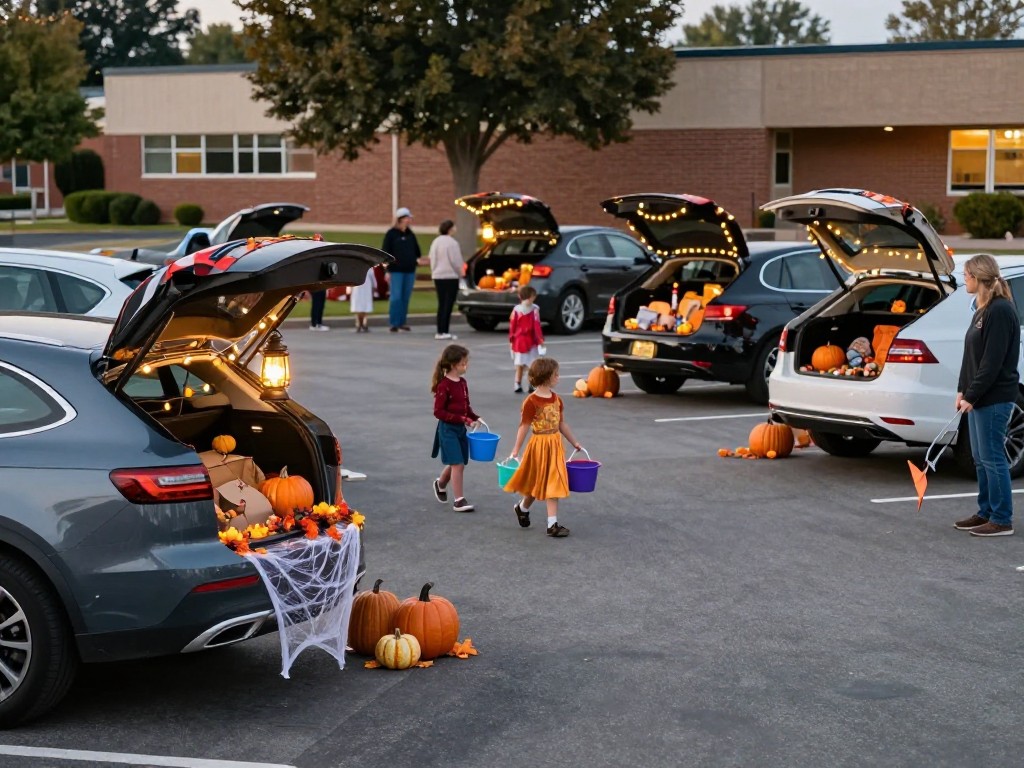
A trunk or treat turns a parking lot into a contained Halloween loop where kids go from car to car collecting candy. It started in church parking lots in the 1990s as a family-friendly alternative to door-to-door trick-or-treating and has since spread to schools, city councils, and nonprofits. The format is simple: families decorate their trunks, park in a loop, and children in costume walk from trunk to trunk. Because everyone stays in one gathered space, organizers may find it easier to manage than dark streets, though traffic control, lighting, supervision, and local rules are still necessary. It also gives families a second chance to wear a costume. This guide walks through the decisions organizers actually face, from picking a date and venue to registering trunks, choosing themes, running games, handling food, and cleaning up. It draws on published event-planning accounts and is meant for anyone hosting or helping with a trunk or treat, whether it is a small church gathering or a larger neighborhood event.
What a Trunk or Treat Is and Why Communities Host One
A trunk or treat is a community Halloween event, usually held in a parking lot, where families decorate their car trunks and kids trick-or-treat from car to car. It is popular with schools, churches, and neighborhood groups as a contained alternative to walking door-to-door, since everyone stays in one gathered space. The format began in church parking lots in the 1990s and has become a tradition organized not just by churches but by schools, city councils, and nonprofits.
Organizers host trunk or treats for several practical reasons. The event creates a controlled environment where children remain under adult supervision, which can help address pedestrian safety concerns: research cited by the American Red Cross indicates the risk of pedestrian fatalities is 43% higher on Halloween compared to other nights, and children ages 4 to 8 are 10 times more likely to be hit by a vehicle on Halloween than on any other evening. A trunk or treat also builds community: it gives families an excuse to wear that Halloween costume more than once, offers a consolidated experience for rural areas, and provides double the candy in a shorter time. For churches and nonprofits, it can be a welcoming front door—a Salvation Army organizer noted that trunk or treat tells the community “We’re here” and opens conversations about programs and services. Not every visitor will come back for Sunday worship, and that is okay; the event still shifts perceptions and builds connections.
The core activity is simple: costumed children walk through a coned-off parking lot, stopping at cars with decorated trunks to receive candy. The decorated trunks become the main event, and the social side matters as much as the candy. Because the format is flexible, it scales from a handful of cars to a full festival with games, contests, and food. The rest of this guide covers the decisions that make that scaling work, from date and venue to cleanup.
Tips
- Keep the focus on safety and fun; a simple event with a few volunteers can be meaningful.
- Consider pairing the event with a costume parade or contest to recognize effort.
Choosing a Date, Time, and Safe Venue
Most trunk or treats run in the late afternoon to early evening, around 5 to 7 p.m., so younger kids can enjoy the event before dark. The weekend before Halloween is the most common date, giving families a relaxed window that does not compete with traditional trick-or-treating on the big night. Some organizers schedule the event on a weekend before Halloween specifically so families can still trick-or-treat the traditional way on October 31.
The venue should be well lit and suitable for children. School parking lots are a common choice, as are church parking lots and community centers. Obtain permission to use the space, assess lighting and traffic flow for the hours you plan to use, and follow any local safety requirements. Confirm that the lot can be closed off or coned so cars are not moving during the event. If the lot is not well lit, arrange portable lighting or adjust the schedule to finish before dusk. Once you have permission, spread the word to parents.
Weather is a real risk. One organizer reported that it started pouring rain in the middle of their event, which forced attendees to huddle under trees and turned tables into rain catchers. Have a rain plan: a covered area, an indoor backup, or a clear cancellation policy. Communicate the plan in advance so families know what to expect.
A sample schedule from a published event ran from 5:30 to 7:00 p.m.: 5:30 light dinner and trunk setup, 6:00 costume parade and contests with prizes, and 6:15–7:00 trunk or treating. That structure gives setup time, a focal activity, and a clear candy window. Adjust times to your crowd and daylight.
Tips
- Check with the property owner about closing the lot to moving traffic.
- Announce a rain plan before the event so families are not caught off guard.
Registering and Organizing Participating Trunks
Advance registration is the backbone of a smooth trunk or treat. Parents planning to decorate their cars should register in advance so you know how much space to reserve for vehicles. Registration also lets you send instructions and guidelines before the event, including any theme for the night. If you have a particular theme, communicate it to all attendees early.
How many trunks do you need? Around 10 to 15 trunks works well for a small event, while 20 to 30 suits a larger one. A good rule of thumb is roughly one trunk per 10 to 15 kids, which keeps lines short and gives families plenty to explore without long waits. Ask each participating car to bring its own candy supply so no single organizer is stuck buying it all. Plan for roughly 2 to 3 pieces per child, per trunk; for an event with 100 kids, that is about 200 to 300 pieces per trunk.
On setup day, allow an hour for participants to set up before the event begins. Have wardens on site to direct traffic to parking spaces. Assign each registered car a specific spot and leave an empty space between vehicles to help space out the trunk-or-treating crowd. This spacing reduces crowding and gives kids room to move safely.
Provide clear guidelines: arrival time, where to park, how much candy to bring, whether electricity is available for lights, and what is not allowed (for example, open flames or anything that could block traffic lanes). A registration form that collects car size and any special needs helps with layout. If you want everyone who comes to participate by having a trunk, say so, but also have a backup plan for walk-in families who just want to trick-or-treat.
Materials
- Registration form (paper or online)
- Parking-space markers or cones
- Copies of guidelines for participants
Steps
- Open registration at least two weeks before the event and ask for car size and theme.
- Send guidelines to registered participants, including arrival time and candy quantity.
- Assign each car a numbered space and mark spaces with cones or signs.
- On event day, have wardens direct cars to their assigned spots and enforce the empty-space rule.
Tips
- Use the one-trunk-per-10-to-15-kids rule to estimate how many cars you need.
- Ask each trunk to bring its own candy to distribute the cost.
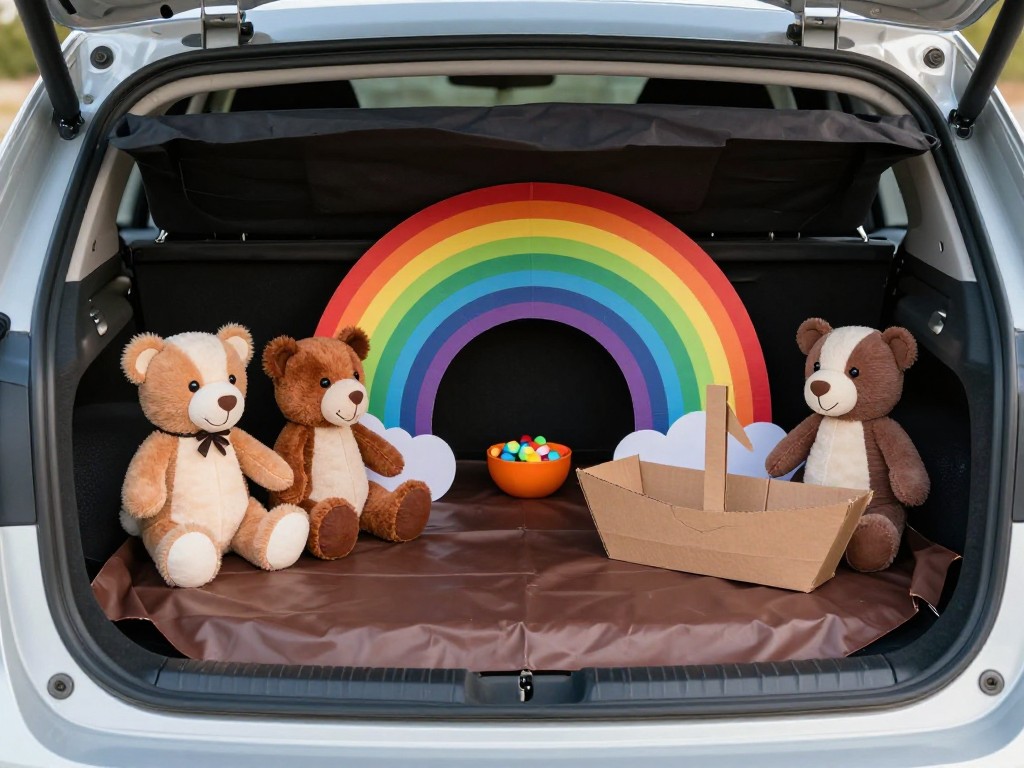
Decorated Trunk Theme Ideas
The trunk is your canvas, and themes make the event memorable. Published examples range from simple to elaborate, so choose a level that matches your group’s time and budget. A low-key but photogenic setup can use pumpkins and gourds in a variety of sizes along with spooky cobwebs window decals. For something more involved, a Hocus Pocus-themed trunk included gravestones for movie characters, cauldrons, witch hats, and skulls. A Beetlejuice-inspired display used black and white tablecloths as a striped backdrop and flashing LED globe lights to illuminate a sign at night.
Pop culture themes are popular. A Star Wars trunk featured lightsabers, a Millennium Falcon, and a pumpkin carved to look like the Death Star. A Super Mario Bros. scene turned paper lanterns into Boos and bombs, with Bob-ombs, chain chomps, and Piranha Plants. A Pokémon Center theme used a cardboard Poké Ball and encouraged costumed Pokémon fans. A Minecraft-themed trunk included pumpkins, TNT blocks, and a life-size Creeper. A Wicked or Wizard of Oz trunk re-created the Emerald City with a yellow brick road and the striped socks of the Wicked Witch of the East sticking out from under bricks.
For faith-based groups, themes can carry a message. The Salvation Army shared seven ideas: Noah’s Ark with animals two-by-two and a rainbow; Jonah and the Whale with a large whale mouth made from a blue tarp or cardboard for kids to walk through or toss beanbags into; the Armor of God with Roman-style armor and labeled pieces; the Fruits of the Spirit with plastic fruit and garden decor; a light-themed trunk with string lights and a Matthew 5:16 sign; and a giant wrapped gift with a John 3:16 sign. These themes work because they are visual and interactive.
Other accessible ideas include an Under the Sea trunk with blue streamers, paper jellyfish, seashells, and a bubble machine; a Candy Land board game with colorful gumdrops and lollipop trees; and a fall farmstand scene made from a transformed play kitchen. The common thread is a clear focal point and a few props that invite photos and conversation.
Tips
- Pick a theme that matches the age of your helpers and the time you have to build.
- Use battery-powered lights or confirm electrical access before planning lighted props.
Games, Contests, and Music That Keep Families Engaged
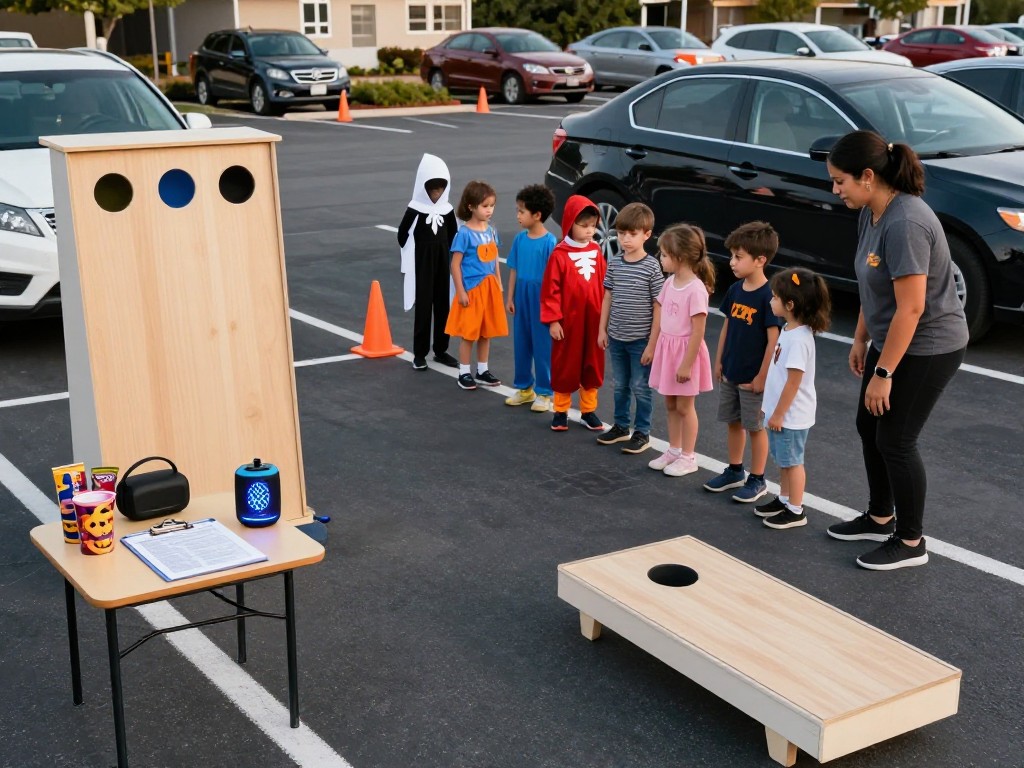
Games and contests turn a quick candy loop into a proper community event. Have games organized and ready in the parking lot before the trunk-or-treaters arrive. Simple options include a snap apple dunking contest and ring toss. You can also host a competition for the parents, giving small prizes to winners of each game. An overall prize for the best decorated vehicle is a common highlight.
A costume and trunk contest recognizes people who went above and beyond. One organizer planned a short costume parade to evaluate costumes and picked winners in categories such as best DIY costume, best group costume, and best overall costume. For trunks, categories included best overall trunk, most creative trunk, and spookiest trunk. When announcing winners, give a small prize—fall-scented candles for adults and candy for kids were used at one event; gift cards are also popular because attendees already have plenty of candy. Printable award certificates can be prepared in advance with a spot to write in names.
Music sets the mood. A simple approach is to have someone make a playlist on their phone and play it through a Bluetooth speaker in the parking lot. Keep the volume at a level that allows conversation and does not overwhelm young children. If you have a DJ or sound system, confirm power access and a safe placement away from traffic lanes.
Other add-ons that keep families engaged include photo challenges, a pumpkin beanbag toss, and glow-stick giveaways. These extras give kids something to do between trunks and encourage families to stay longer. Plan the order: games can run throughout the event, while contests may need a scheduled time for judging and announcements.
Materials
- Ring toss set or beanbag toss
- Apples and a tub for dunking (if using)
- Bluetooth speaker and playlist
- Prize items (candles, candy, gift cards)
- Award certificates and pens
Steps
- Set up game stations before the event opens and assign a volunteer to each.
- Schedule a costume parade or judging window and announce it in advance.
- Play background music at a conversational volume.
- Announce contest winners and distribute prizes.
Tips
- Keep game rules simple so young children can participate without long waits.
- Have a few extra prizes on hand for tie-breakers or unexpected winners.
Food and Drink Options for Attendees
Whether to serve food depends on your budget and capacity. One organizer served a “light dinner” to make it easier for families to worry about one less thing before running out the door. Their menu was a nacho bar with tortilla chips, nacho cheese, chili, jalapenos, sour cream, and guacamole. They kept the menu simple, and the nachos were a hit with kids and adults. They sourced nacho cheese from a local fast-food restaurant’s catering option, which was popular with teens. In past years, they did a crockpot soup or chili potluck.
Another option is to invite local food trucks to set up in the lot for the evening so families can purchase dinner if they choose. This shifts the food work to vendors but may require permits or space. If you provide food, plan for hydration: provide water so children stay hydrated. A volunteer can cook burgers and hot dogs on a grill, but check venue rules about open flames and place the grill away from pedestrian flow.
Keep food service simple and safe. Use covered serving utensils, keep hot foods hot and cold foods cold, and provide trash cans near eating areas. For specific temperature and time guidance, follow your local health department's rules, especially for potlucks, grills, and catered food. If you offer a potluck, ask contributors to label dishes and list common allergens. For a church or school event, a light dinner can be a draw that makes the evening easier for busy families, but it is optional. Decide based on your budget and volunteer capacity, and communicate the plan so families know whether to eat beforehand.
Materials
- Serving tables and chairs
- Trash cans
- Serving utensils and plates
- Water dispenser or bottled water
Tips
- Choose a menu that can be served quickly and does not require complex cooking on site.
- If using a grill, confirm permission and keep it away from the trunk loop.
Event-Day Setup, Flow, and Cleanup
Event-day logistics determine whether the event feels calm or chaotic. Allow an hour for participants to set up before the event begins. Have wardens on site to direct traffic to parking spaces. Assign each registered car a specific spot and leave an empty space between vehicles to help space out the trunk-or-treating crowd. This spacing is a crowd-management option; the layout must follow the property owner's requirements and local fire or emergency-access rules.
Map your layout and flow early. Decide the direction of the candy loop, where games and food will be, and where attendees enter and exit. Keep pedestrian areas clear of vehicles and mark them with cones or signs. If you have a costume parade or contest, designate a staging area and a route that does not cross the candy loop. Have a volunteer at the entrance to greet families and explain the flow.
Cleanup should be planned before the event starts. Provide trash cans in different locations across the parking lot. Require those who have parking spots to clean up their own space after the event is finished. Assign a cleanup crew to handle common areas, and bring extra trash bags and gloves. If you served food, have a plan for disposing of perishables and recycling where available. A quick walk-through at the end catches stray candy wrappers and lost items.
After the event, debrief with volunteers: what worked, what ran out, and what to change next year. Keep registration records and notes on trunk count and candy usage to make the next event easier to plan.
Materials
- Trash cans and extra trash bags
- Cones or signs for traffic flow
- Gloves for cleanup
- A simple map of the layout
Steps
- Set up cones and signs to mark the candy loop and pedestrian areas one hour before start.
- Position wardens at the entrance and at key turns to direct cars and families.
- Place trash cans throughout the lot and announce the cleanup expectation to trunk hosts.
- After the event, walk the lot with the cleanup crew and collect stray items.
Tips
- Leave an empty space between cars to reduce crowding.
- Ask trunk hosts to clean their own space to share the cleanup load.
Making the Event Welcoming and Meaningful
A trunk or treat succeeds on logistics, but it is remembered for how people felt walking through the lot. The sources agree on a simple formula: keep the loop easy to navigate, give families something to do beyond collecting candy, and make the welcome obvious to first-timers. The Salvation Army's account of the format's growth notes that families who might never walk into a church will gladly stop by a parking lot filled with music, laughter and kids in costume — which is exactly why the welcoming details deserve planning time rather than leftovers.
Start with the entrance. Assign a volunteer to greet cars and direct them to registered spaces, as LotusWorks recommends, and leave an empty space between vehicles so the trick-or-treat crowd can spread out. A greeter at the lot entrance also catches families who arrived without registering a trunk, so they can be pointed toward the candy loop instead of circling. Clear flow matters more than elaborate signage: one direction of travel, trunks facing the walking path, and games placed between rows rather than in the middle of the route. These are organizer recommendations, not guarantees of safety; follow the property owner's requirements and local rules.
Set the mood with sound. Party Like a Cherry recommends music for atmosphere and describes a low-cost approach: someone builds a playlist on a phone and plays it through a Bluetooth speaker in the parking lot. Music does double duty — it signals the event is happening and gives waiting families something to enjoy. Keep the speaker positioned so it does not drown out volunteers giving directions.
Give people a reason to linger. Goosechase lists games between the trunks, costume contests, trunk-decorating awards, photo challenges and music as the extras that turn a quick candy loop into a community event. LotusWorks suggests ready-to-go games such as a snap apple dunking contest and ring toss, plus small prizes for winners. Party Like a Cherry describes a short costume parade with categories like best DIY costume, best group costume and best overall costume, and trunk awards for best overall, most creative and spookiest — with small prizes for adults and candy for kids. If weather cancels the parade, walking the lot to judge costumes still works.
Make the welcome visible, not assumed. For faith-based hosts, the Salvation Army's examples show how a theme can carry a message without a speech: an ark with animals two-by-two, a whale mouth for beanbag tossing, labeled armor pieces for Ephesians 6, fruit-of-the-Spirit cutouts in a garden scene, a trunk covered in lights with a Matthew 5:16 sign, or a giant wrapped gift. Each pairs decoration with a simple activity or giveaway, so conversation happens naturally. The source is candid that not every visitor will return for Sunday worship — the point is the connection itself.
Decide about food deliberately. Party Like a Cherry frames food as a budget question and describes a light dinner (a nacho bar with chips, nacho cheese, chili, jalapenos, sour cream and guacamole) so families had one less thing to handle before heading out, plus past crockpot soup and chili potlucks and the option of inviting local food trucks. LotusWorks suggests a volunteer grilling burgers and hot dogs and providing water so children stay hydrated. None of these is required; pick one based on budget, volunteers and weather shelter.
Plan for the conditions you cannot control. Party Like a Cherry's event was hit by pouring rain mid-way, tables set up for serving became rain catchers, and people ate huddled under trees. That experience argues for a covered or indoor fallback for food and judging, and for telling volunteers in advance what changes if it rains. LotusWorks also recommends trash cans in several locations and asking each registered car to clean its own space afterward.
Close the loop. Announce contest winners while the crowd is still present, thank volunteers by name, and collect any borrowed decorations the same evening. If your group wants to repeat the event, note what worked — the number of trunks, the candy supply, which games held attention — while it is fresh. The sources describe trunk or treat as something families look forward to year after year; that continuity comes from small, repeatable choices rather than one elaborate display.