
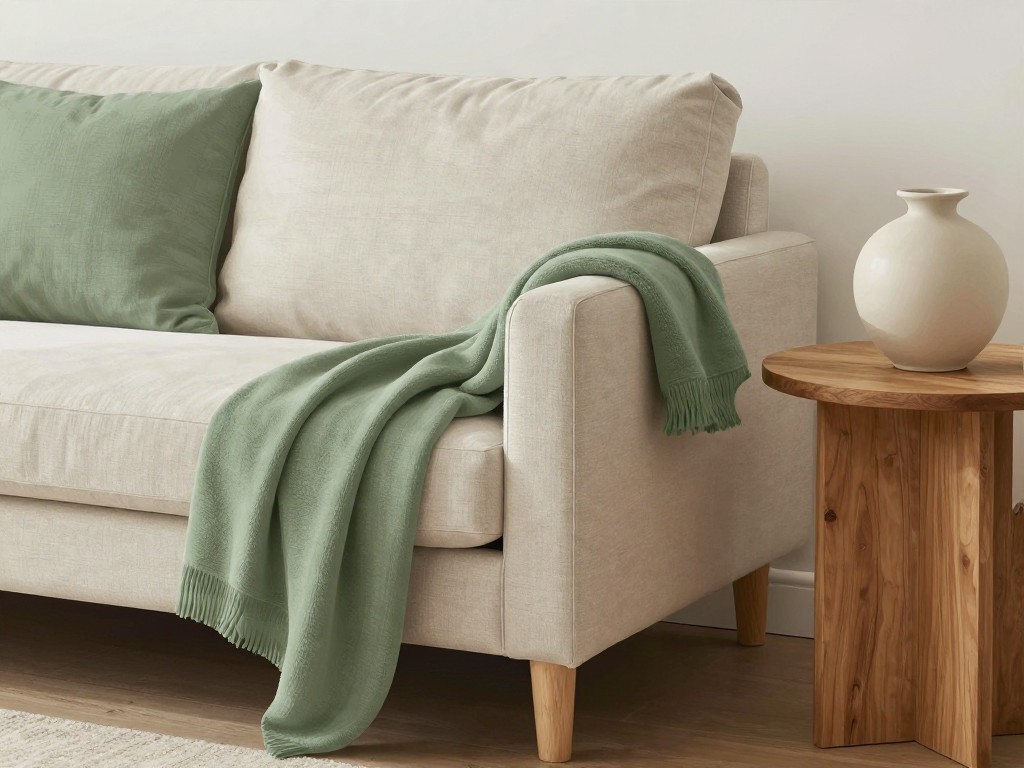
Winter living room decor after Christmas works best as a subtraction, not a shopping trip. Strip out the holiday-specific pieces first, then rebuild the room around a small set of quietly seasonal textiles and wood or ceramic accents you already own. The decision pattern below is repeatable: keep the structure, swap the covers, repeat one palette, and restyle one surface at a time. Two optional palettes are offered at the end of the palette section, so you can choose a direction without repainting or replacing furniture.
What to keep when refreshing winter living room decor after Christmas
Start by sorting the room into three groups rather than redecorating from scratch. The first group is structure: furniture, rugs, lamps and wall colour stay where they are. Seasonal textile guidance from IKEA frames throws and removable cushion covers as the practical way to change a room's palette without moving furniture, which makes them the natural keepers in this reset.
The second group is holiday-specific: anything that only reads as Christmas. Ornaments, themed figurines, tinsel and printed novelty pieces come out. The third group is quietly seasonal: plain textiles, wood, ceramic and muted colour that can carry a room through the colder months without naming a holiday.
Designer examples gathered by Homes and Gardens lean on layered warm neutrals and muted greens with visible texture such as wood and linen. Treat those as aesthetic references, not as a requirement to repaint or a claim about warmth or insulation. The point is a calmer surface story, not a performance promise.
Work in this order so you never empty the room at once: clear holiday-specific items, assess what remains, then decide whether anything needs to be added. Most rooms need less than expected. If your holiday scheme was deliberately colourful and you are unsure how to step it down, the approach in this rosy holiday room guide shows how a strong colour story is built, which helps you judge which pieces were doing the holiday work.
A useful test before anything returns to the room: does this object read as winter, or only as December? If it only reads as December, it goes into storage.
Tips
- Sort into structure, holiday-specific and quietly seasonal before buying anything.
- Keep furniture and lighting fixed so the reset stays low-effort.
- Judge each object as winter or December-only, not as nice or not nice.
Change cushion covers and leave a practical throw
A simple, visible change is the cushion covers. Because removable covers let you change colour and texture without replacing the cushion itself, you can shift the room's mood without replacing the cushions. Choose covers in the palette you are moving toward, then put the holiday-print covers away with the ornaments.
A practical throw earns its place by being usable, not just displayed. Fold it where someone actually sits, over an arm or across the back of the sofa, so it can be reached. A throw draped decoratively across a chair nobody uses is decoration pretending to be function.
Limit the swap. As a flexible styling suggestion, try two or three cover changes on one sofa and see how the group reads; replacing every cushion at once can look like a showroom set. Keep at least one cover in a neutral that already matches the rug or walls so the new pieces have something to sit against.
Texture matters more than pattern here. Visible weave, a soft pile or a simple linen-look cover gives the eye something to rest on without introducing another motif. If you want a second surface to reset with the same logic, the usable-table approach in this Christmas coffee table guide translates directly: clear the themed items, keep one textured layer, and leave the surface working.
Materials
- Removable cushion covers in the chosen palette
- One practical throw within reach of a seat
- Storage bag or box for holiday-print covers
Steps
- Remove holiday-print covers and set them aside with the ornaments.
- Fit two or three new covers, keeping one neutral that matches the existing room.
- Fold the throw over a sofa arm or chair back where it can be used.
- Step back and check the sofa reads as one calm group rather than a display.
Tips
- Change covers before buying anything else; it is a low-effort visible shift.
- Keep one neutral cushion so the new palette has an anchor.
Repeat a winter palette with things you own
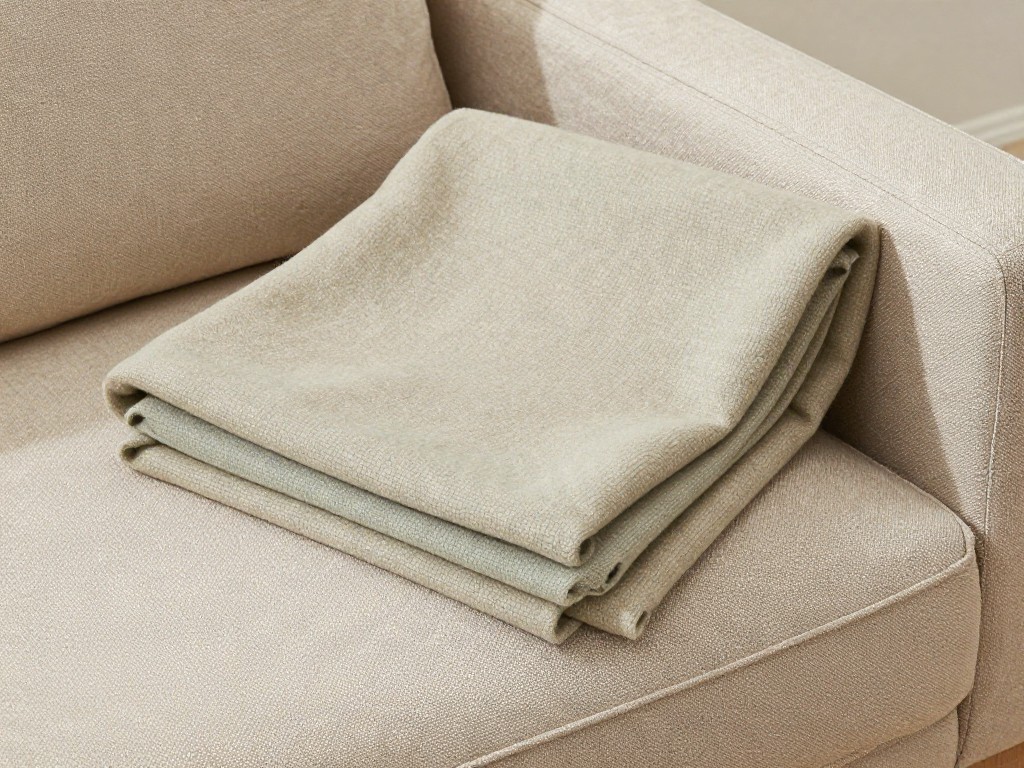
A palette reads as deliberate when it repeats. Pick two or three colours and place them at least three times around the room: a cushion, a ceramic, a book spine, a wood tone. Repetition is what makes a scheme look chosen rather than leftover.
Audit before you shop. Walk the room and gather objects that already sit in your chosen family of colours, then group them where they will be seen together. Wood and ceramic accents are the easiest carriers because they read as quietly seasonal without any holiday motif.
Two optional palettes, both drawn from the layered warm-neutral and muted-green direction in the designer examples:
– Sage and ivory: muted green textiles against off-white walls, with mid-tone wood and plain ceramic. Calm and easy to repeat with existing neutrals.
– Warm oat and clay: soft oatmeal textiles with terracotta or clay-toned ceramics and darker wood. Warmer overall, and forgiving if your room already has brown or brass.
Neither palette requires repainting. Both are aesthetic choices, not claims about how the room will feel physically. Choose the one that already matches the largest number of objects you own, because that is the one you can repeat without buying.
If your room is small, the same repetition logic applies with fewer items; this small-room holiday plan shows how restraint keeps a compact space from feeling crowded.
Materials
- Objects you already own in the chosen colour family
- Wood or ceramic accents
- Textiles in one or two of the palette colours
Steps
- Choose either sage and ivory or warm oat and clay.
- Gather existing objects that already sit in that colour family.
- Place the palette colours in at least three spots around the room.
- Remove anything that clashes rather than adding something to balance it.
Tips
- Repetition of two or three colours does more than adding new objects.
- Pick the palette that matches what you already own, not the one you like most in isolation.
Restyle a single shelf and leave room for daily use
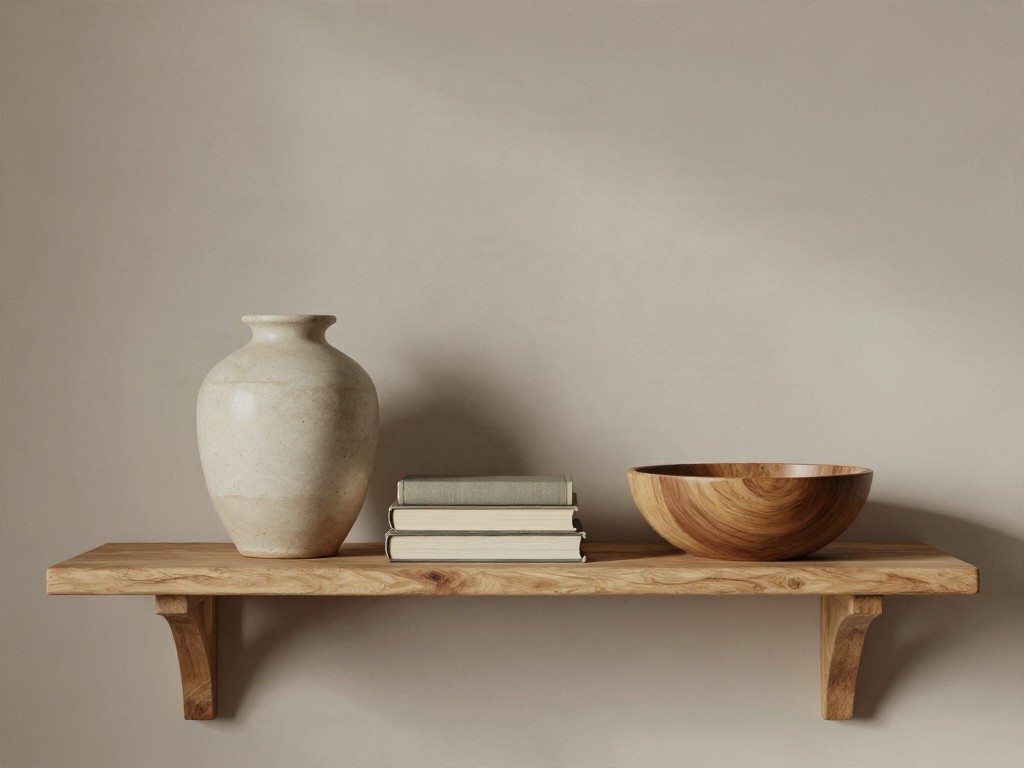
Choose one shelf or surface and treat it as the focal restyle. Clear it completely, then return a small number of objects: a wood or ceramic piece, one textile or book, and empty space. Empty space is part of the design, not a gap to fill.
Leave room for daily use. A shelf that holds keys, post or a remote needs a clear zone, so keep one section deliberately open. This is the difference between a styled shelf and a shelf that gets cleared again by Tuesday.
Keep the arrangement low and grounded. Group objects in odd numbers, vary height, and let the largest piece anchor one end. Avoid flames and open candles on or near the shelf; the scene works on texture and form alone, and it removes a hazard from a surface people reach across.
Once the shelf is done, stop. Resist the urge to restyle every surface in the same session, because a room where every shelf is arranged reads as staged. One considered shelf plus the sofa swap is usually enough to signal the seasonal change.
Materials
- One wood or ceramic accent piece
- One textile or a small stack of books
- A clear zone for everyday items
Steps
- Empty the chosen shelf completely.
- Return a small group of three objects, varying height.
- Anchor one end with the largest piece.
- Leave one section open for daily use and check the shelf from the doorway.
Tips
- Odd-numbered groups are easier to balance than pairs.
- Leave candles off the shelf; texture and form carry the scene.
- Restyle one surface only, so the room does not look staged.