
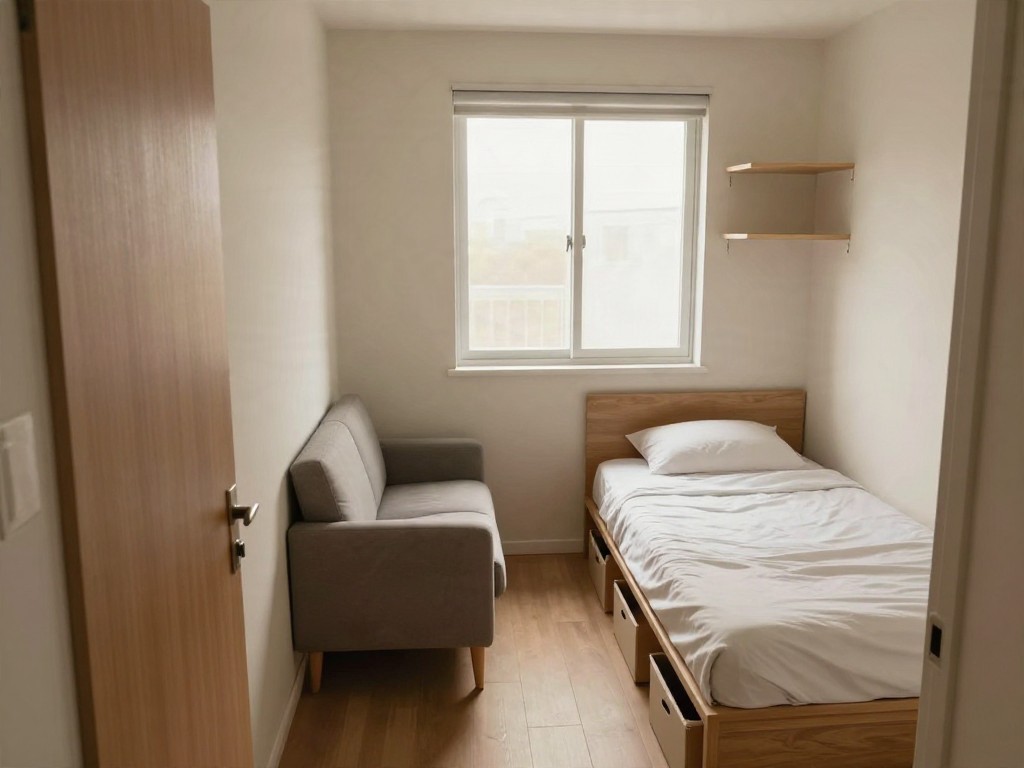
Small room ideas work best when they start with how you move through the space, not with a shopping list. The most useful approach is to treat the room as a set of volumes and paths: clear the route between doors, decide which furniture can do two jobs, and then use the overlooked edges — corners, walls, and the space under a bed — for storage. The designer examples gathered here show how built-in joinery, folding pieces, and simple zoning can make a compact room feel more organised and more generous. Use the ideas that fit your room, and treat structural or built-in work as an optional professional project rather than a weekend certainty.
Small room ideas: plan around doors and a useful walking path
Start with the routes people actually take. A small room feels cramped when furniture interrupts the path between the door, the window, and the main seat or bed. Walk the room and note where you naturally step; that line is the walking path you want to keep clear.
Designer advice in the House & Garden examples points to the same principle from a different angle: think about how far things project from the walls, not just the furniture but also wall lights. A slim wall light or a shallow piece leaves more usable floor than a deep one. The same source suggests keeping as much off the floor as possible in compact bedrooms and bathrooms, because a clear floor creates the idea of space.
Before moving anything, measure the door swing and the space needed to open any cupboards or windows. Then place the largest piece — usually the bed or sofa — so it does not block those movements. If a piece must sit near a door, choose one with a low profile or a folding element so it can be pushed aside when the room is in use.
This is also the stage to decide whether a built-in solution is worth exploring. The House & Garden examples describe banquette seating with storage underneath and box beds built into the length of a room. Those are professional joinery projects, not quick fixes; the layout benefit is real, but the work should be planned with someone who can assess the room. For a non-structural alternative, use the wall decor layout ideas for small, awkward walls to keep wall-mounted pieces from crowding the path.
Tips
- Mark the walking path with painter's tape before moving furniture.
- Check door swings and cupboard openings before committing to a layout.
- Prefer slim wall lights and shallow furniture where the path is tight.
Pick furniture that serves two purposes
Dual-purpose furniture is one of the most repeated small room ideas because it removes the need for separate pieces. The House & Garden source highlights folding chairs, stacking stools, tilt-top tables, and steps that fold into stools — things you can easily push out of the way. It also notes that antiques often have folding elements, and that slimline pieces such as Georgian sofas with upright backs can work well because they do not project as far into the room.
A second route is built-in multi-function furniture. The same source describes banquette seating with storage underneath and a box bed built into the room, with niches and cupboards. The English Home examples add window seats and bed nooks with built-in drawers beneath the bed. These are optional professional projects; the decision to make is whether you want to solve storage through joinery or through movable pieces.
For a renter or a low-intervention approach, choose one or two movable dual-purpose pieces rather than filling the room with them. A storage ottoman that doubles as a seat, a folding desk, or a slim console with drawers can each replace two separate items. The test is whether the piece is easy to move when you need the floor clear. If it is heavy and fixed, it is not really dual-purpose in a small room.
Keep the number of functions per piece realistic. A bed with drawers can suit a room that needs extra storage. Check whether you can open the drawers with the rest of your furniture in place.
Materials
- Painter's tape for marking furniture footprints
- Tape measure
Tips
- Choose folding or stacking pieces where the floor needs to be clear regularly.
- Look for slimline furniture that projects less from the wall.
- Treat built-in storage beds and banquettes as professional joinery projects.
Use corners, walls, and under-bed space
The overlooked edges of a small room often hold the most storage. The House & Garden source advises looking at all the different surfaces and using spaces you do not often notice: shelves above radiators, the inside walls of a window, the inside edge of a dividing wall, the sides of a chimney breast, a shelf and cupboard under a windowsill, or little shelves along the inside edge of a thick wall. The point is to see the room in raw volumes and ask where you can access things from.
Under-bed space is another area that can be useful for storage. The English Home examples describe built-in drawers beneath a bed in a nook, and the House & Garden source describes a box bed with niches and cupboards. If you are not building in, use shallow lidded boxes or rolling drawers that fit the height you have. Measure the clearance first; a box that does not slide out easily will not be used.
Corners can take a corner shelf, a slim cabinet, or a small desk. The key is to avoid creating a dead corner that is hard to reach. A corner piece with a door that opens fully is more useful than a deeper unit that blocks access. The House & Garden example of a washing machine installed in a corner cupboard with the door in the hallway shows how rethinking access can turn a dead corner into useful space — but that is a plumbing and joinery project, not a simple swap.
If you have a clear wall and need more storage, consider a shelf or hooks that you can reach comfortably. Keep the walkway clear and follow the hardware instructions for your wall type. Use a qualified installer for heavy items or uncertain wall conditions.
Tools
- Tape measure
- Spirit level for checking shelves
Tips
- Measure under-bed clearance before buying storage boxes.
- Use corner units with doors that open fully rather than deep fixed boxes.
- Look for shelf space above radiators and under windowsills.
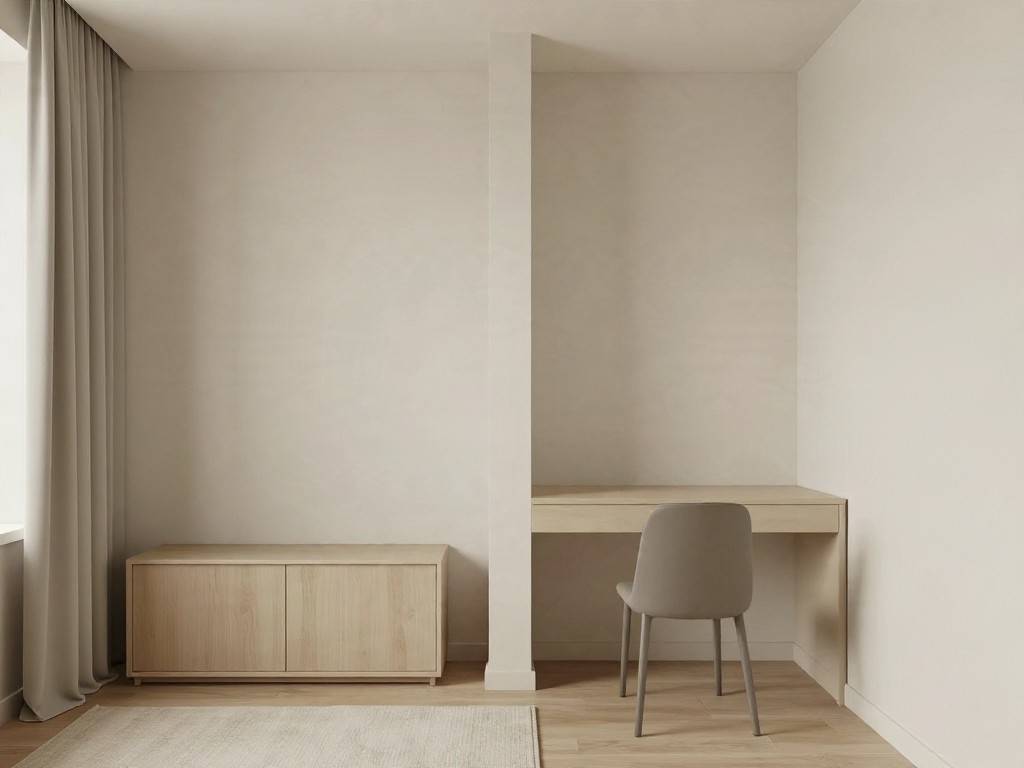
Small room ideas for giving a compact space two distinct zones
A small room can still have two zones if you define them clearly. The Homes & Gardens source on great rooms makes the case for zoning: different areas need to serve their intended purpose while remaining connected. It lists partition walls, columns, beams, and changes in floor level as structural options, and strategically positioned furniture, rugs, curtains, and lighting as non-structural dividers.
In a compact room, the non-structural options are usually the practical ones. A rug can mark a sitting area; a curtain can soften the line between a sleeping area and a desk; a slim console or a low shelf can act as a visual divider without blocking light. The English Home examples describe a bed nook or alcove that creates a room within a room, with curtains that can be drawn across for a sense of retreat. That is a useful model for a studio or a small bedroom that also needs to work during the day.
Decide the two functions first — for example, sleep and work, or sitting and dining — and then choose one divider for each boundary. Avoid adding several partial dividers, which can make the room feel chopped up. The goal is a clear change of use, not a maze.
Tips
- Choose one divider per boundary rather than several partial ones.
- Use a rug or curtain to mark a zone without blocking light.
- Keep the walking path clear through both zones.
Keep colors and shapes visually consistent
Visual consistency helps a small room feel calmer and more spacious. The Homes & Gardens source recommends a neutral palette in subtle off-white and warm tones to create an open, airy feel, and notes that consistent finish materials — flooring, plaster walls, ceiling beams — ensure a seamless transition between areas. The English Home examples add that papering into every corner of an awkward alcove or sloped ceiling can draw the eye upwards and create a cocooning feel.
The practical decision is how many finishes and colours to introduce. A single wall colour carried through the room, with one accent in a contained area such as an alcove or a bed nook, is easier to live with than several competing schemes. The English Home source notes that bolder colours or patterns can work in a defined nook because they are contained. That is a useful way to add character without making the whole room busy.
Shapes matter too. Slim, upright furniture projects less than deep, rounded pieces, and a consistent furniture profile makes the room feel less cluttered. The House & Garden source points to upright-backed sofas as an example of a shape that works in small spaces. Look for repeated lines — vertical panelling, straight shelf edges, simple frames — rather than a mix of heavy curves and deep profiles.
If you are adding wall decor, keep the arrangement simple and aligned with the room's main lines. The wall decor layout ideas for small, awkward walls show how a contained arrangement can stay tidy; adapt that containment principle to everyday wall pieces rather than letting them spread across every wall.
Tips
- Carry one wall colour through the room and contain accents in nooks.
- Choose slim, upright furniture profiles where space is tight.
- Repeat a few shapes or lines rather than mixing many.