
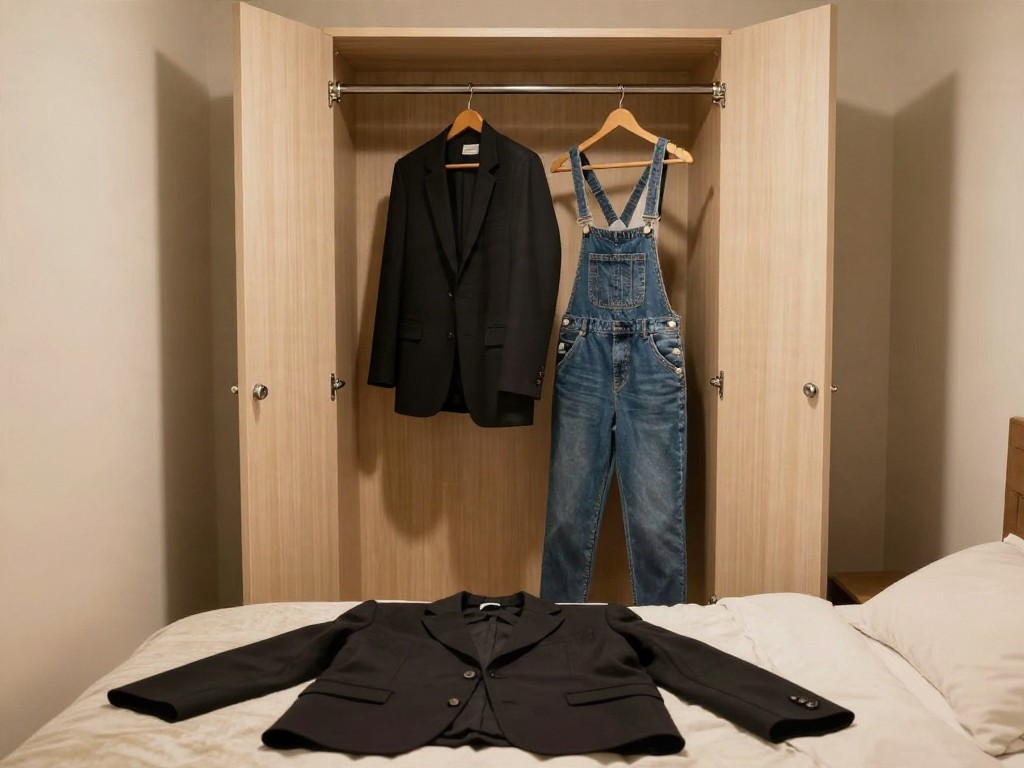
When the party is tonight and the costume shop shelves are bare, last minute halloween costumes DIY style are the practical answer. The reliable approach is to shop your own closet first, then add one small prop or makeup detail that signals the character. Real Simple's guidance is blunt about the order of operations: decide which direction you're going — pop culture, an accessory-led look, or a pun — before you start pulling clothes, because that choice narrows everything that follows. The ideas below come from published costume roundups, so treat them as starting points to adapt to what you actually own, not as tested instructions.
Start With What You Already Own for Last Minute Halloween Costumes DIY
The fastest route to a wearable costume is an inventory of your closet, not a shopping list. Real Simple frames last-minute costumes as things you can assemble from what's in your wardrobe, with only a quick trip to the craft stash for basic supplies. People's pop culture roundup makes the same point from the other direction: many recognizable movie and TV characters can be put together from pieces you might already have.
So before you commit to a character, walk through these categories and note what you can actually put on your body tonight:
– All-black or all-white outfits. These are the base for cats, ghosts, mimes and dozens of pop culture figures.
– A blazer or business-casual set. GoodHousekeeping notes that business casual attire alone can read as a recognizable office-drama character.
– Denim, overalls and plain tees. Everyday basics that pun costumes lean on heavily.
– One statement accessory. A cross necklace, oversized sunglasses, a tweed hat or a headband can carry an otherwise ordinary outfit.
– Shoes you can walk in. Costume parties involve standing; pick footwear before you pick the character.
Write down two or three complete outfits you could wear right now. That short list is your real menu, and it prevents the classic mistake of choosing a costume that requires one item you don't own. If you're planning several looks at once, the approach in this guide to coordinating DIY group Halloween costumes helps you match outfits across people rather than solving each one separately.
Tips
- Lay candidate outfits on the bed before trying them on — it's faster to judge a full look than individual pieces.
- Check for stains, missing buttons and hem damage now, not at the door.
- Set aside one small bag for props and makeup so nothing goes missing mid-evening.
Choose a Costume Direction Fast
Verify the remaining project-specific details before starting.
Tips
- Give yourself a hard ten-minute limit on choosing a direction.
- Ask one person which of your two options reads more clearly — outside eyes catch confusion fast.
- Skip any idea that requires a purchase you can't make today.
Closet-Based Character Looks
These are costumes where the clothing does most of the work and the accessories finish it. Each one below is drawn from published roundups and can be adapted to what you own.
Cat. The Pioneer Woman's version is about as simple as it gets: an all-black outfit, pointy cat ears, and painted whiskers and nose. If you don't own ears, a headband with two felt triangles is a craft-stash fix.
Holly Golightly (Breakfast at Tiffany's). A little black dress, long black gloves and accessories carry this old-Hollywood look. It rewards anyone with a formal piece already hanging in the closet.
Buffy and Willow. The Pioneer Woman pairs red pants and a velvet top with a cross necklace for one, and a patterned sweater with a jumper dress and tights for the other. This works well for two people with different wardrobes.
Business-casual office character. GoodHousekeeping points out that business casual attire alone can read as the part, with one character specifically requiring red hair.
A musician in black. GoodHousekeeping notes that a black shirt and black pants essentially complete a recognizable singer look.
Emotion characters. GoodHousekeeping suggests looking at what's in your closet first, then deciding which emotion you can represent — a clever way to let your existing clothes choose the costume.
Jenna Rink (13 Going on 30). People lists this as a popular choice that celebrities have worn, built from a distinctive outfit rather than specialty pieces.
For each of these, the finishing detail matters more than the clothes: whiskers, a necklace, oversized sunglasses, a specific color. Decide your detail before you start dressing.
Tips
- Test face paint on your inner arm first if you're using a product you haven't worn before.
- Keep makeup simple — a nose and whiskers read better than a full face at a dim party.
- Carry a small pouch with your makeup for touch-ups.
Pun and Wordplay Costumes
Verify the remaining project-specific details before starting.
Tips
- Choose a pun whose prop you can set down — you'll want your hands free for food.
- If you're going to a party with a costume contest, a pun with a visible prop reads better in photos than an all-black look.
- Keep the explanation short; if it needs a paragraph, pick another pun.
Craft-Stash and Recycled-Material Costumes
When the closet fails, the recycling bin and craft drawer often deliver. These builds take longer than a closet look, so reserve them for when you have an evening rather than ten minutes.
Candy corn. The Pioneer Woman layers white, orange and yellow pieces to recreate the stripes, with an optional DIY candy corn bag as a finishing touch. This is a layering exercise, not a construction project.
Colorful sheet ghost. The Pioneer Woman suggests dyeing fabric brightly and cutting simple eye holes — a twist on the classic white sheet.
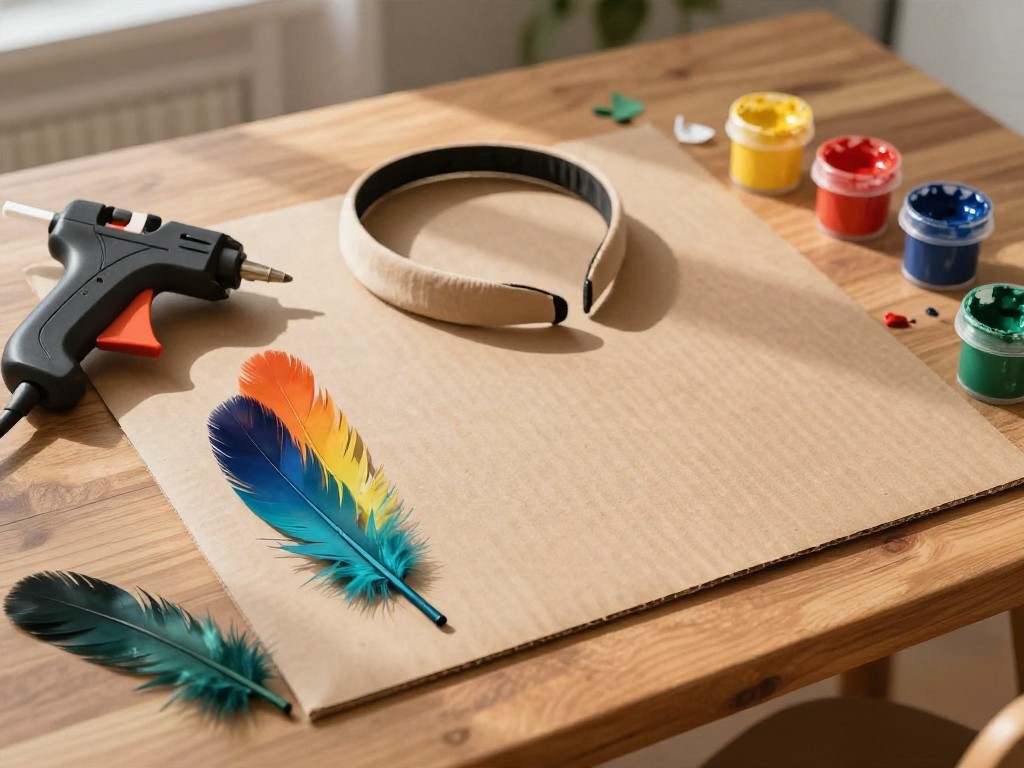
Feather headband bird. The Pioneer Woman describes gluing colorful feathers to a headband, using yellow face paint on the nose as a beak, and coordinating the outfit with the feathers.
Mother Earth. A nature-inspired outfit with a DIY head wreath covered in flowers and foliage, paired with earthy colors.
Mouse and cookie. The Pioneer Woman's version uses mouse ears, overalls and a painted-on nose, with a giant cardboard cookie carried as the prop.
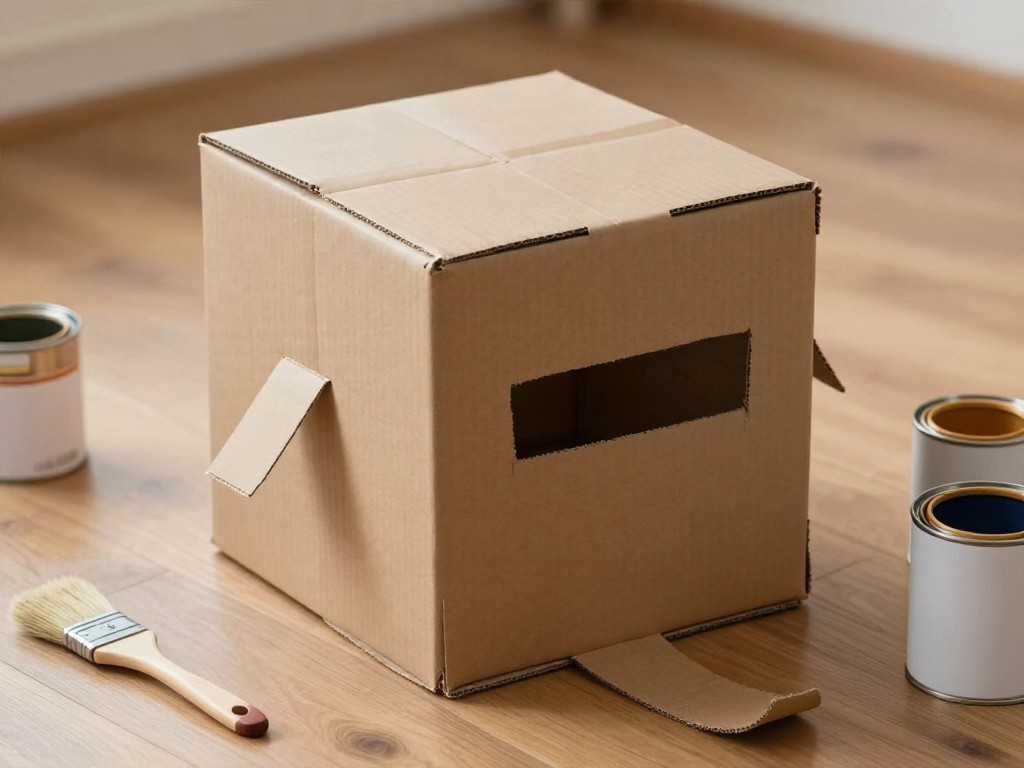
Jewelry-box ballerina. GoodHousekeeping gives a detailed build: fold and tape the box flaps inside, cut a waist hole in the top, add a faux cardboard drawer with a wooden bead knob, paint it pink, line the back flap with mylar contact paper as a mirror, glue on bows and gems, and secure a ribbon strap inside with duct tape.
Cardboard Croc. GoodHousekeeping traces a shoe shape onto cardboard, cuts a face hole and seven smaller holes, adds a folded strap, and paints several coats.
Building block, jellyfish, scuba diver and campfire. KeaBabies describes a painted box with glued cups as a block, an umbrella with streamers as a jellyfish, painted soda bottles as a scuba tank, and paper towel rolls with felt flames as a campfire.
Cutting cardboard and using hot glue carry real risk. Adults should handle blades and glue guns, and these builds are described by their sources rather than tested here.
Materials
- Cardboard boxes and sheets
- Craft paint in several colors
- Hot glue gun and glue sticks
- Felt, construction paper or craft foam
- Mylar contact paper
- Ribbon or duct tape for straps
- Feathers, headband, face paint
Tools
- Box cutter or craft knife (adults only)
- Scissors
- Paintbrushes
- Cutting mat
Steps
- Choose a build sized to the time you have — layering costumes first, cardboard builds last.
- Gather every material before cutting anything.
- Cut cardboard on a protected surface, with an adult handling the blade.
- Paint in thin coats and let each dry before adding the next.
- Attach straps and props with tape or glue, then test the fit over the actual outfit.
Tips
- Paint cardboard outdoors or on newspaper; it takes longer to dry than paper.
- Wear the finished build over the outfit you plan to use before the event.
- Keep glue guns away from children and unplug them when finished.
Kid-Friendly and Family Options
Children's costumes have an advantage: kids are read generously, so a simple silhouette plus one prop usually works. KeaBabies frames its list around items already in the house, which is the right starting point when a costume was forgotten.
Watercolor palette. KeaBabies cuts a white towel or sheet into a long rectangle and attaches large felt or construction-paper circles in several colors, then fastens it around the child.
Jellyfish. An umbrella with streamers or ribbon attached around the outside, paper eyes, and a solid-color outfit underneath.
Building block. A large box with head and arm holes, painted one solid color, with painted cups or bowls glued to the front.
Scuba diver. Painted soda bottles taped together with string or paper straps, worn over black clothing with goggles.
Campfire. A red shirt with paper towel rolls glued to the base, felt flames above them, and optional marshmallows on a stick.
Stick figure. A white top and bottoms with black duct tape lines down the arms, front and legs, plus a paper-plate face.
Lettuce. Green tissue paper crumpled onto a green tee, with small red balloons tucked in.
Peppa Pig. GoodHousekeeping uses a red or pink dress, rain boots, and a small drawn detail attached to a craft stick.
Safety matters more than accuracy here. Avoid anything around the neck, check that streamers and ribbons can't be pulled tight, and skip small glued pieces for children who still mouth objects. These are published descriptions, not safety-tested designs.
Tips
- Dress children in layers — costumes over warm clothes work for trick-or-treating.
- Skip face paint on very young children and use a headband or hat instead.
- Do a five-minute walk test indoors before heading out.
Group and Couples Costumes
Group costumes are easier than they look because the repetition does the work. Once one person's look is settled, the rest copy it with small variations.
Squid Game players. People notes that a green tracksuit is essentially the whole costume, which makes this one of the cheapest group options.
Minions. A yellow shirt and jeans, per People, scaled across any number of people.
Angels with a twist. The Pioneer Woman describes white dresses, fluffy wings, halo headbands and oversized wine glasses as a cheeky best-friend pairing.
Buffy and Willow. A two-person pairing with distinct wardrobes, described above.
Ceiling fan squad. Real Simple's pom-pom or mophead version scales to a group with matching ponytails and skirts.
Feather-trimmed flock. The Pioneer Woman suggests DIY feather-trimmed headbands plus coordinated bright outfits for anyone who wants a matched group look.
Peppa Pig family. GoodHousekeeping's version works for one child plus multiple adults in red or pink.
The coordination problem is the real work: agreeing on a color palette and one shared prop. Decide the shared element first — a color, a tracksuit, a headband — then let each person solve their own version. If you're also dressing the house for the evening, the projects in this guide to easy Halloween DIY decorations can reuse the same craft supplies. And if the group is planning ahead for next year, a Halloween countdown calendar is a way to start earlier.
Tips
- Assign one person to source the shared prop for everyone.
- Agree on a color palette in a group message before anyone shops.
- Photograph the group once assembled — matching looks read best together.
Finishing Touches and Quick Fixes
Verify the remaining project-specific details before starting.