
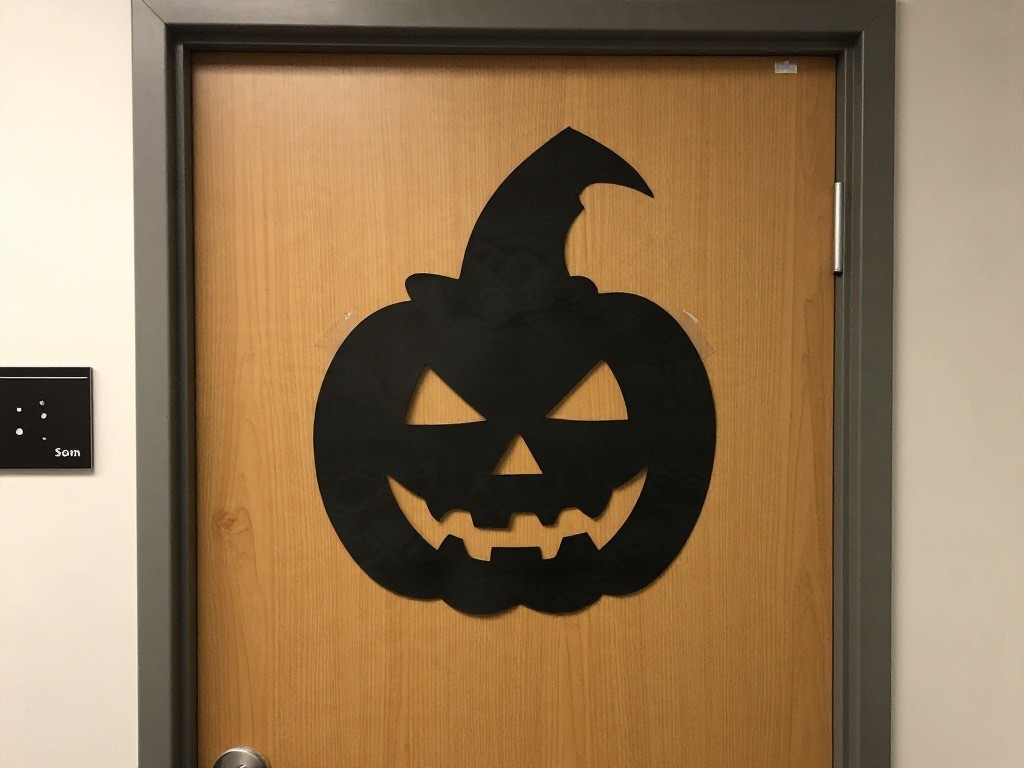
The best Halloween door contest ideas start with the organizer's brief, not the decorations. Before anyone buys paper or cuts bats, read the rules your office contest actually issued: who can enter, what theme is expected, how much of the door and wall you may cover, which fasteners are allowed, and when judging happens. Kutztown University's published office door decorating contest is a useful example of how specific those rules can be — it accepts teams, asks for a season-appropriate theme, limits the footprint, requires removable fasteners, keeps the door functional and leaves office identification visible. Treat it as an example only, not a standard your building follows. Your own building manager and fire guidance decide what is permitted. If your team wants a home display instead, the coordinated front door plan covers that separate task.
Halloween door contest ideas: check your office brief first
The best halloween door contest ideas start with the organizer's brief, not the decorations. Contest criteria and deadlines are organizer-specific. The Kutztown example shows a team entry with a season-appropriate theme, a constrained footprint, removable fasteners, a working door and visible office identification — but those are that event's written rules, not a universal standard. Ask the organizer for the current brief and confirm four things in writing: the entry deadline, the judging date and criteria, the allowed footprint, and any theme or category limits.
Then ask the building manager where decorations can go. Fire guidance for decorated doors stresses recognizable doors, visible exits, working hardware and unobstructed egress. Those are context-specific building requirements, so get your own site's approval rather than borrowing area limits from a school document. Leave door hardware, signage and the escape path clear, and follow local requirements.
Write the answers into a one-page team note. If the brief is silent on something you plan to do — covering the frame, hanging items from the ceiling, using anything electrical — ask before you build. This article covers planning an office entry only; it does not describe a live contest, prizes or judging standards. If your team wants a home display instead, the coordinated front door plan covers that separate task.
Pick one theme with a bold focal point
Try one clear theme and a large focal point for a hallway display. Choose a single theme that fits the organizer's season-appropriate expectation, then decide what the eye should land on first: a large central character, a doorway effect, a scene title, or a repeated motif that builds toward the center.
Keep the theme legible at a distance. Step back from your mock-up and simplify any details that are hard to see. A strong focal point plus two or three supporting elements is a practical option that keeps the build manageable; a fully covered door is another approach, but only if the organizer and building manager approve it and it does not obscure door identification, hardware, exits or egress. Choose whichever suits your team.
Match the theme to your team's actual capacity. A paper-cut scene, a bat swarm, a haunted-house facade or a simple silhouette can use flat paper pieces held with removable fasteners approved by the organizer and building manager. If your team is also planning a party, the backyard Halloween party ideas guide is a separate resource for that event, not a source of door rules.
Write a one-sentence pitch — theme, focal point, color palette — and get the team to agree before anyone starts cutting. Agree on the concept before buying supplies so the team can work from the same plan.
Mock up a removable design
Plan for removal from the first sketch. The Kutztown example requires removable fasteners, and that constraint should shape the design, not arrive as an afterthought on install day.
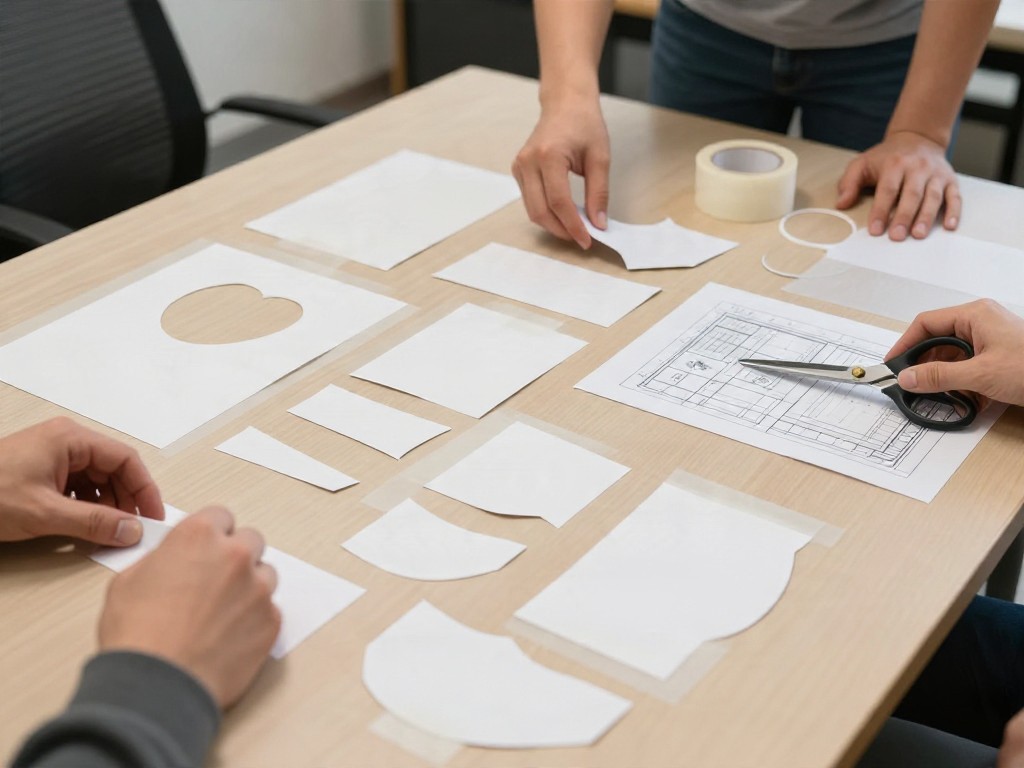
Mock up the layout at full size on the floor or a table using the same paper dimensions you will hang. Tape the pieces together, stand back, and check the focal point and proportions before committing. Photograph the mock-up so teammates who are working remotely can see the plan.
Choose fasteners that come off cleanly and are approved by your building manager. Avoid anything that damages the finish, and never block the hardware. Keep the design in flat layers where possible; heavy or dangling elements are harder to secure and harder to remove.
For a motif that repeats cleanly, the bat wall decor ideas show how a simple repeated shape can carry a display — useful as a visual reference for pattern and spacing, not as office contest rules.
Split the work among teammates
Divide the entry into roles rather than handing one person the whole door. A workable split for a small team:
– Brief owner: confirms rules, deadline and building approval in writing.
– Design lead: sets the theme, focal point and palette, and approves the mock-up.
– Cutters and assemblers: produce the pieces to the agreed dimensions.
– Installer: hangs the design and checks the door afterward.
– Removal lead: schedules takedown and stores reusable pieces.
Agree on a shared materials list and a single place to keep everything. Set an internal deadline earlier than the organizer's so there is time to fix problems. Keep one person accountable for the final check against the brief — a design that ignores the footprint limit or hides office identification may fail the organizer's stated rules regardless of how good it looks.
Inspect the installed door and plan removal
After installation, test the door the way the building will use it. Open and close it fully, confirm the hardware works, check that exits and the escape path are unobstructed, and make sure signage and office identification are still visible. Fix anything that interferes before judging.
Photograph the finished door in daylight, and from the viewing distance the organizer specifies if any. Compare it against the brief one last time: footprint, theme, fasteners, visible identification.
Schedule removal before the contest ends. Note which pieces can be reused and which should be recycled, and confirm where waste goes. Removal is part of the entry, not an optional cleanup — leaving decorations up past the organizer's deadline can breach the same rules that governed installation.
If something in the brief is unclear, ask the organizer rather than guessing. This guide offers planning decisions only; it makes no claims about judging outcomes, prizes or safety guarantees.