
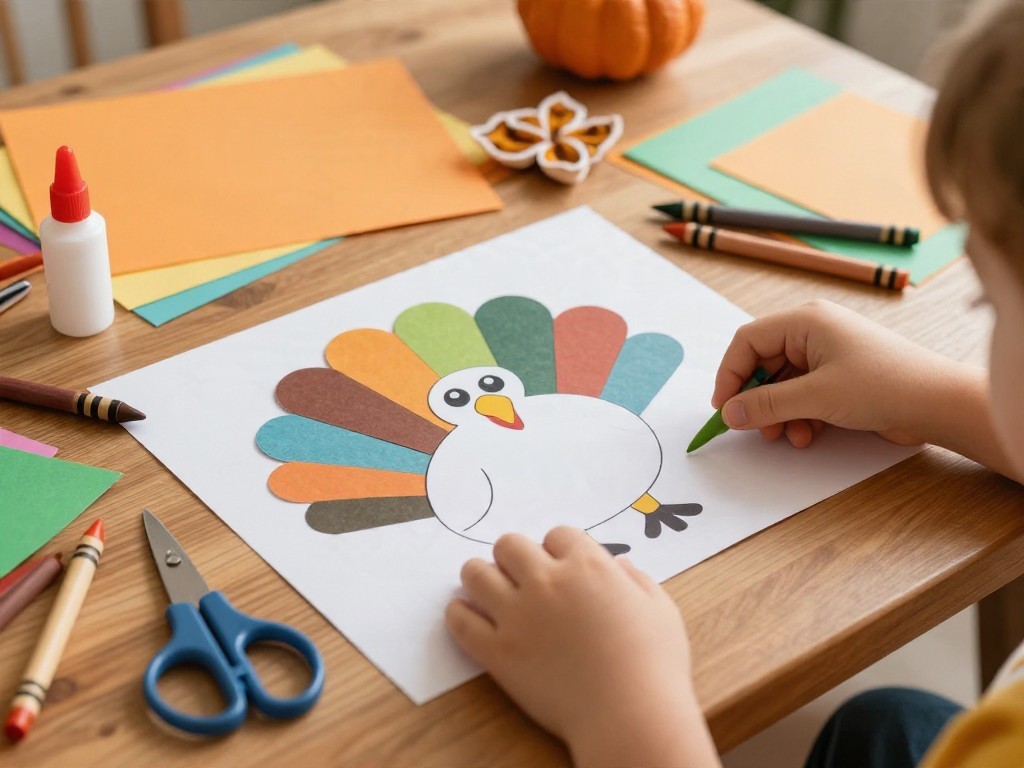
The turkey disguise project is a classic Thanksgiving paper craft with a playful story: the turkey needs to hide so it doesn't become dinner. Kids start with a simple turkey outline and turn it into another character, animal, or object using everyday art supplies. This guide explains what the project is, how to choose a disguise, what supplies to gather, and how to keep the making kid-led. It also covers age adaptations and a simple way to test and share the finished disguise. For a different seasonal twist, see these disguise a ghost project ideas, and if you want a blank bird to start with, try this build a turkey printable.
What the Turkey Disguise Project Is
The turkey disguise project is a paper craft with an imaginary story attached. Children begin with a turkey picture or template and transform it into someone or something else—an astronaut, a chef, a snowman, a pineapple, or any character they invent. The goal is to make the turkey look different enough that it won't be recognized.
The project is often used in classrooms and at home as a family engagement activity. It can be an individual project, a group project where costumes are related, or homework. The core materials are ordinary: a turkey outline, paper or cardstock, crayons or markers, scissors, and glue. Optional collage materials like fabric scraps, foil, cotton balls, and craft feathers add texture.
A purchased kit is optional. You can use a turkey outline you already have, draw one, or download a free template. The project is flexible: children can draw directly on the turkey, add flat paper pieces, or combine both approaches. The emphasis is on the child's design choices, not on a perfect finished product.
The Story Prompt: Helping the Turkey Escape Dinner
The familiar story prompt is simple: Thanksgiving is coming, and the turkey is in trouble. Every year the turkey is chosen as the main course, and every year it narrowly escapes. This year, the turkey decides to disguise itself in plain sight. Children are asked: How can you help this turkey avoid becoming dinner?
That prompt gives the project a purpose and a playful frame. It also opens the door to questions that guide design thinking: What could the turkey pretend to be? What parts of the turkey will you need to hide? What would make someone believe the disguise? What materials could you use? And what happens if the first idea doesn't quite work?
If the dinner-escape story feels too intense for your group, you can use an alternative introduction: “Help your turkey dress up for a costume parade.” Children make the same kinds of costumes while imagining where their characters will go and what they will do. Either prompt works; the important thing is that the story gives children a reason to make choices.
Choosing a Disguise Idea
Before showing dozens of finished examples, give children a chance to invent their own disguise. The best turkey disguise is the one they thought of. If they need inspiration, offer a small, manageable set of options rather than an overwhelming gallery.
Here are some disguise ideas that use flat paper construction and can be simplified by drawing details instead of cutting them separately:
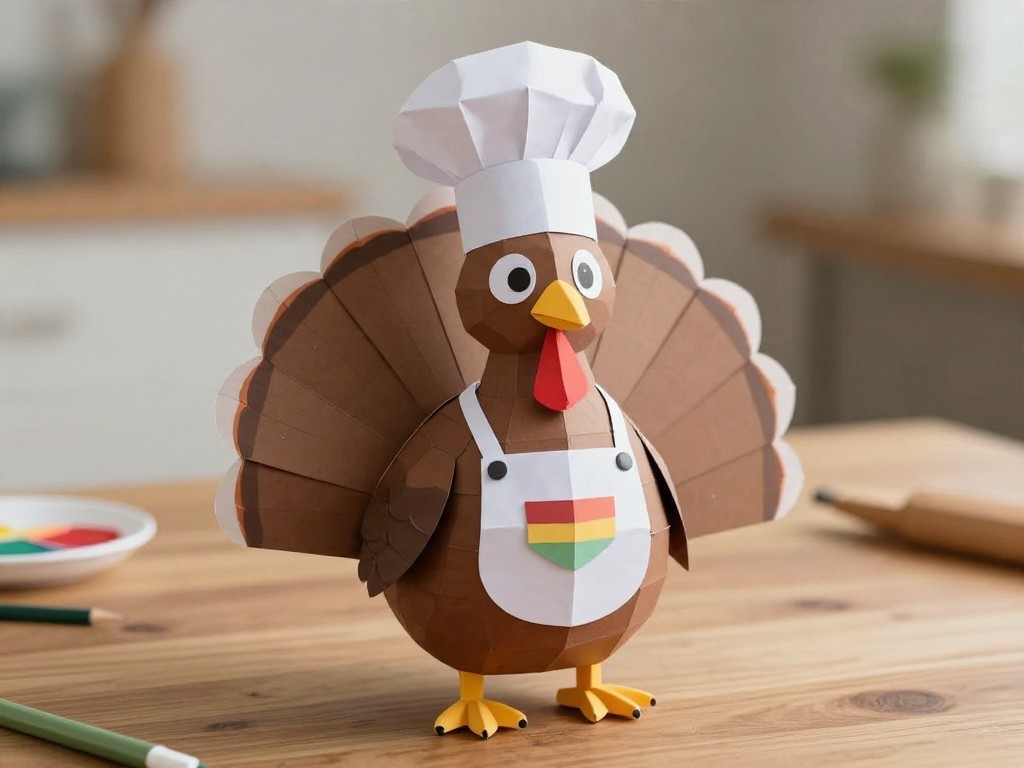
– Chef: A white paper hat and a colorful apron. This is a manageable option with a few large pieces.
– Farmer: A wide paper hat and blue overalls. Most pieces use simple shapes.
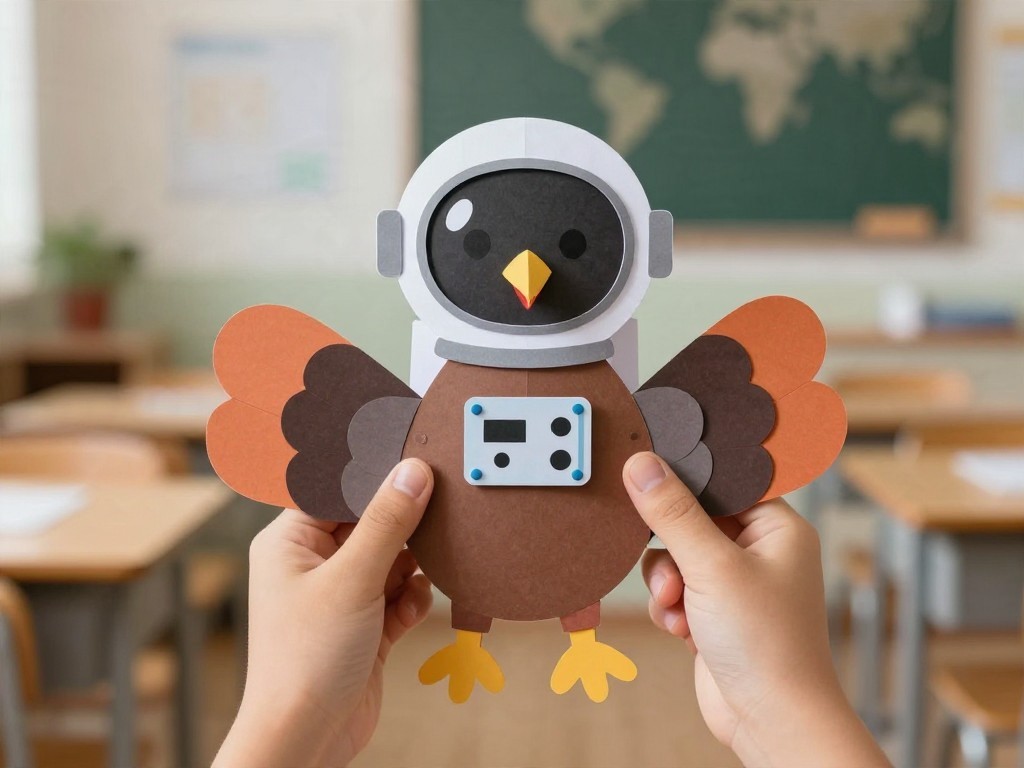
– Astronaut: Gray or white paper, a helmet frame, and a drawn control panel. Adults can prepare the helmet opening.
– Robot: Gray paper rectangles and drawn buttons. Children can add their own controls.
– Detective: A hat, coat, and paper magnifying glass. Adults can prepare the small accessories.
– Painter: A beret, apron, and colorful palette. Crayon marks can replace small paper decorations.
– Scuba diver: A mask, snorkel, and flippers on blue backing paper. The mask opening needs careful cutting.
For an easy starting point, choose the chef or farmer. Children who enjoy adding details may prefer the robot, painter, or detective. Older students might enjoy book character or historical figure disguises, which connect to literature or social studies. The amount of adult help needed depends on each child's cutting skills and the materials chosen. For more inspiration, see these disguise a pumpkin ideas.
Everyday Supplies and Preparation
Most turkey disguise projects use the same basic materials: a turkey outline, printer paper or lightweight cardstock, crayons, colored pencils, colored paper, child scissors, and a glue stick. Optional collage materials include fabric scraps, ribbon, art tissue, craft feathers, aluminum foil, stickers, cotton balls, beads, and pipe cleaners.
Before the session, gather a manageable selection of supplies and demonstrate one attachment technique. A little preparation helps children work with fewer interruptions. If you are using a template, print it on cardstock for durability. Adults can pre-cut intricate pieces for younger children, but leave the design choices to the child.
A simple planning page can help children think through their idea without telling them what to make. They can sketch their disguise, list materials, and decide which parts of the turkey to hide. This planning step is optional but useful for older children or group projects.
Making the Disguise Kid-Led
The grown-up's job is not to make the turkey. Your role is to help find materials, ask questions, provide encouragement, and handle anything your child can't safely do independently. The best part of the project isn't ending up with the cutest turkey; it's the opportunity for children to come up with their own disguise.
Ask open-ended questions: What is your turkey going to pretend to be? What parts of the turkey will you need to hide? What would make someone believe the disguise? What materials could you use? Let children sketch an idea, change their mind, experiment with materials, discover something doesn't work, and try something different.
Raid the house for supplies together. Look in the recycling bin, junk drawer, art supplies, or whatever you already have. Paper, cardboard, foil, yarn, fabric scraps, cotton balls, old magazines, packaging, ribbon, leaves, and crayons or markers are all fair game. When children choose and arrange materials themselves, the finished disguise reflects their thinking.
Adapting the Project for Different Ages
The same turkey disguise ideas can work at different levels when you adjust the number of pieces and the amount of adult preparation. For preschoolers, prepare detailed cuts before the activity. Offer a few large shapes and let children choose colors, arrange pieces, and glue with help. Simple disguises like a chef hat or farmer hat work well.
Kindergarten and first-grade children can handle more pieces and may enjoy adding drawn details. They can cut simple shapes with child scissors and use a glue stick, though some may still need help with smaller pieces. The robot, painter, or detective disguises offer room for creativity without overwhelming complexity.
Older students can explore more challenging designs: patterns and colors only, camouflage backgrounds, optical illusions, or detailed disguise plans. They might also connect the project to creative writing by explaining how their disguise works or writing a story from the turkey's point of view. Turkey disguise activities work well for kindergarten through fifth grade, with complexity scaling accordingly.
Testing and Sharing the Finished Disguise
Once the disguise is complete, put it to the test. Show the finished turkey to someone who hasn't seen the plan and ask: Can you tell it's a turkey? What do you think it is? This simple step gives children feedback and a chance to decide whether they'd like to change anything.
A disguise test can be a fun way to wrap up the project. Children can also share their work with the class or family, explaining their choices and the story behind the disguise. If the project was done as homework, a short presentation or gallery walk lets everyone see the variety of ideas.
Remember that the goal is not a perfect, Pinterest-worthy disguise. The goal is for children to think creatively, solve a problem, and express their ideas. Celebrate the effort and the imagination, not just the final product.
Extending the turkey disguise project with writing and art connections
Once the disguise is built, the turkey disguise project can carry a second round of learning. Sources describe it as a cross-curricular activity: children use what they know from literature, history or social studies to design a costume, then explain their choices. The writing and art work below is optional — the paper craft stands on its own — but it gives older children a reason to keep going after the glue dries.
Writing: let the turkey explain itself. Little Bins for Little Hands suggests turning the finished art into a simple creative writing activity. A few prompts that fit the project's own story:
– Write a short paragraph in the turkey's voice explaining where it is hiding and why no one will recognize it.
– Describe the disguise step by step, as instructions for another turkey.
– Write a letter from the turkey to the farmer, pleading its case.
Innovation Kids Lab frames the whole task as a problem to solve — Thanksgiving is coming, so how does this turkey avoid becoming dinner? A written explanation of *how the disguise works* is a natural extension of that question, and it asks children to justify their design rather than just decorate it.
Book character connections. Study.com suggests modeling the disguise on a book character. If a class has recently read *Charlotte's Web*, children might choose Wilbur, Charlotte, Fern or Templeton. The source recommends having students consider questions about the character before designing, which turns the craft into a literature response. Teachers can leave the choice open-ended or narrow it to a genre or a book the class has just finished.
Career and historical figure connections. The same source describes disguising the turkey as a worker in a specific career field, which lets students research jobs they find interesting and exposes them to careers they may not have considered as they view classmates' projects. Historical figures are another option for a social studies tie-in; the source suggests students consider how the time period affects the figure's appearance. For the career option, research comes first and the paper costume follows; for historical figures, the source does not explicitly require research before designing, so you can decide based on your goals.
Art-style connections. Little Bins for Little Hands lists disguises inspired by art styles and artists, including a Picasso-style turkey built from geometric shapes, unexpected colors and unusual angles, and a Murakami-inspired turkey with smiling flowers, bright colors, bold outlines and repeating patterns. A King of Hearts playing-card turkey combines coloring, cutting, gluing and watercolor painting, with a cotton swab used for the paint. These are good bridges to a short art-appreciation conversation: what makes a Cubist shape look Cubist, and how does a pattern repeat?
Presentation and group options. Study.com notes the projects can be presented as individual work, as group projects in which the costumes within a group are somehow related, or as a family engagement activity done for homework. A group theme — all farm animals, all book characters from one novel — adds a planning step that individual projects skip.
Keep the child's ownership. Innovation Kids Lab is direct about this: the best disguise is the one the child thought of, and the adult's job is to help find materials, ask questions, encourage and handle anything the child cannot safely do independently. Writing and art extensions should follow the same rule. A dictated sentence from a preschooler counts; a paragraph rewritten by an adult does not.
If you want a fresh starting shape before the next round, the build a turkey printable gives children a body to color, cut and paste. For a seasonal project with the same disguise logic, see these disguise a pumpkin ideas or this collection of disguise a ghost project ideas.
What the sources do not settle. None of them prescribe a grade-by-grade writing standard, a rubric or a required length. Little Bins for Little Hands notes that turkey disguise activities work well from kindergarten through fifth grade, with younger students coloring and assembling simple designs and older students exploring detailed patterns, optical illusions, collage and creative writing. Treat the writing as an invitation matched to the child, not a benchmark.