
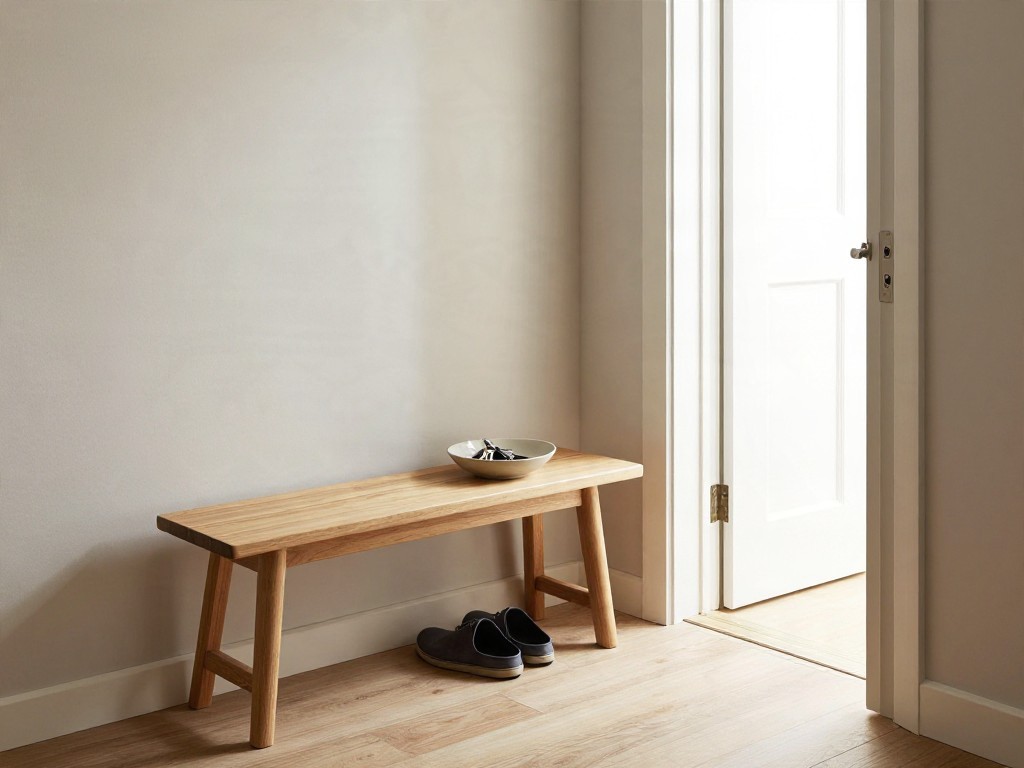
A small entryway drop zone works best when it is planned around the door swing and the path you actually walk. Instead of adding furniture first, start by mapping the clear floor area and the route from door to hallway. Then give shoes, coats, and keys each a defined landing spot so the space can be reset quickly before you leave. The ideas below use a slim bench, a shallow tray, and side hooks to keep everyday items contained without blocking movement.
Plan a small entryway drop zone around the door swing
Before choosing a bench or console, stand at the door and open it fully. Note the arc the door travels and the clear path you need to walk through. The drop zone should sit outside both. A slim bench or narrow cabinet can work along a side wall, but only if its depth leaves the walking route open. Compare an existing console or freestanding bench where it fits; if either crowds the door swing, scale down rather than force it.
Use painter’s tape on the floor to mark the door swing and the furniture footprint. This makes the trade-off visible: a deeper bench may hold more, but it can also narrow the path. If furniture fits, choose the shallowest piece that handles the things you use each day. The goal is a defined zone that does not become an obstacle.
Tips
- Open the door fully and watch where it stops before placing any furniture.
- Mark the door swing and furniture footprint with tape to test the layout without moving heavy pieces.
Give shoes and coats a landing spot
Shoes and coats need a consistent place to land, or they will spread across the floor. A slim bench with space underneath can hold a couple of pairs of everyday shoes, while a narrow cabinet or a row of hooks at the side of the doorway can take coats and bags. The source examples use hooks, narrow cabinets, and slim benches to define the drop zone, with baskets and containers grouping smaller items.
Choose one landing spot for shoes and one for coats. For shoes, a low shelf or an open boot tray under the bench keeps them contained. Use an existing hook rail if coats can hang clear of the doorway. A freestanding rack can work if it fits outside the walking path. If you use a cabinet, reserve one section for everyday coats and bags so they do not migrate to chairs or tables.
Keep the arrangement simple enough that everyone can use it without thinking. Try a bench with a clear space below and a nearby hook if there is room for both. If you need more storage, consider a narrow cabinet that fits the available depth rather than adding a second piece of furniture.
Materials
- Slim bench or narrow cabinet (depth suited to your entryway)
- Wall hooks or a hook rail
- Boot tray or shallow basket for shoes
Steps
- Place the bench or cabinet outside the door swing and walking path.
- Use an existing coat hook or rack that leaves room for the door and walkway.
- Put a boot tray or basket under the bench for everyday shoes.
- Assign one hook per person for coats and bags.
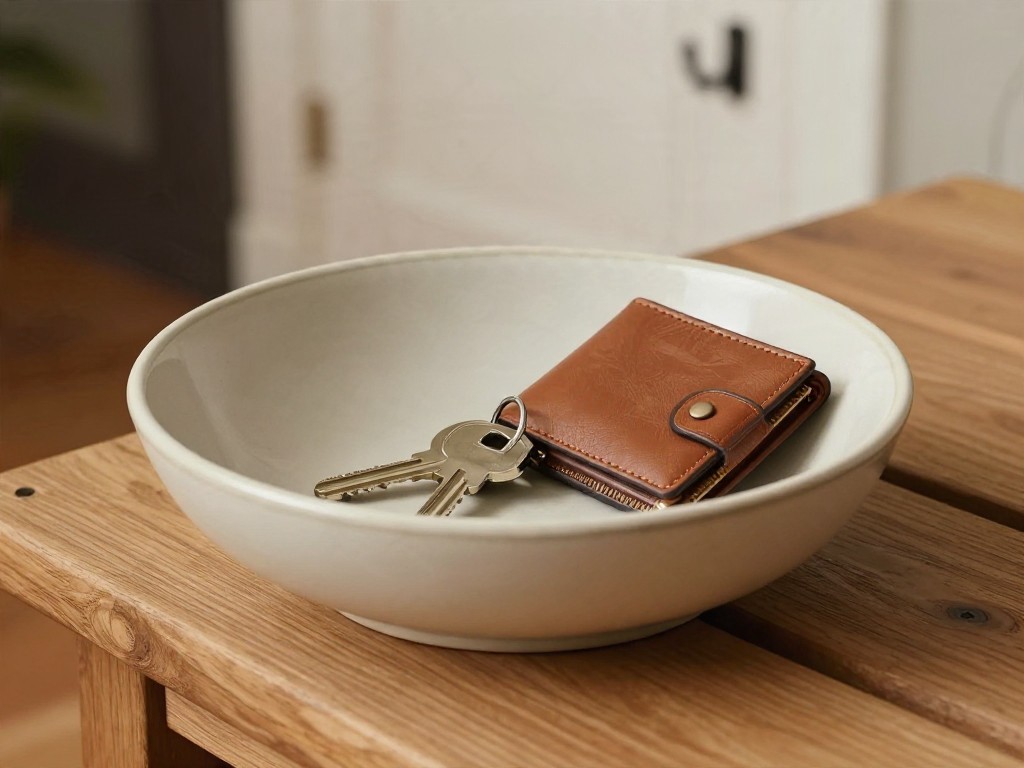
Set up a tray for keys and outgoing items
Keys, wallets, and outgoing mail need a single, visible spot. Try a shallow bowl or tray on a surface near the door to hold keys and other small items. Place it near the door but out of the door swing, so you can drop items on arrival and grab them before leaving.
Use one tray for keys and another for outgoing items if the surface allows. If space is tight, a single shallow bowl can hold keys, and a small clip or pocket on the side can hold mail. The source examples group small items in baskets and containers, which keeps surfaces from becoming cluttered.
Avoid using the tray for permanent storage. Its job is to hold only what you need for the next trip. At the end of the day, move anything that does not belong there to its proper home. This keeps the drop zone ready for the next arrival.
Materials
- Shallow bowl or tray
- Small basket or container for outgoing items
Steps
- Place the tray on the bench or cabinet surface, away from the door swing.
- Put only keys and immediate outgoing items in the tray.
- Empty or reset the tray at the end of each day.
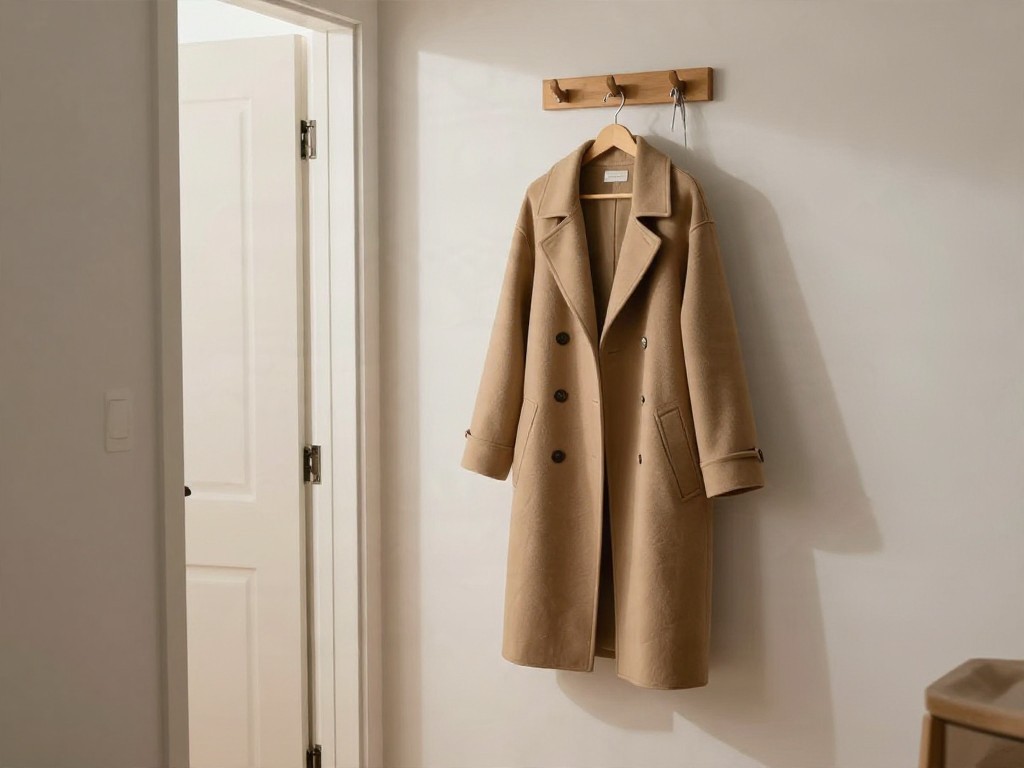
Make the space easy to reset before leaving
A drop zone only works if it is easy to reset. Build a short routine: hang coats on their hooks, put shoes in the tray or under the bench, and return keys to the bowl. This keeps the entryway from accumulating clutter.
Make the reset visible and simple. If hooks are at the side of the doorway and the tray is on the bench, each item has one obvious home. Avoid stacking items on top of the bench or piling coats on a chair. If you notice that certain items never make it to their spot, adjust the location rather than adding more storage.
Tips
- Reset the drop zone at the same time each day, such as before bed or before leaving.
- If an item keeps missing its spot, move the spot closer to where you naturally drop it.