
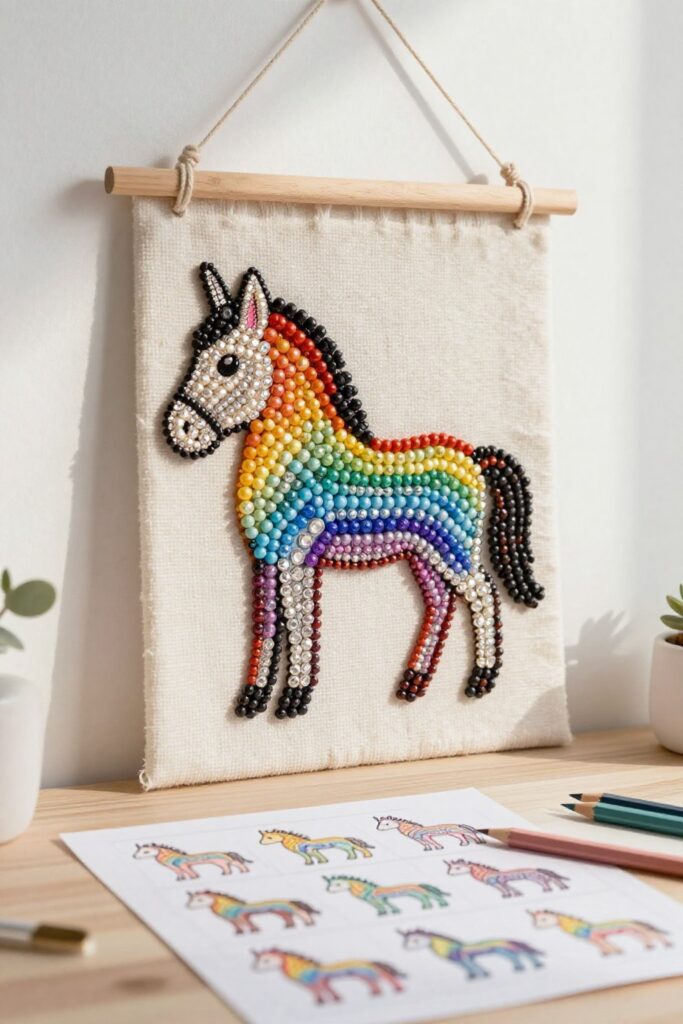
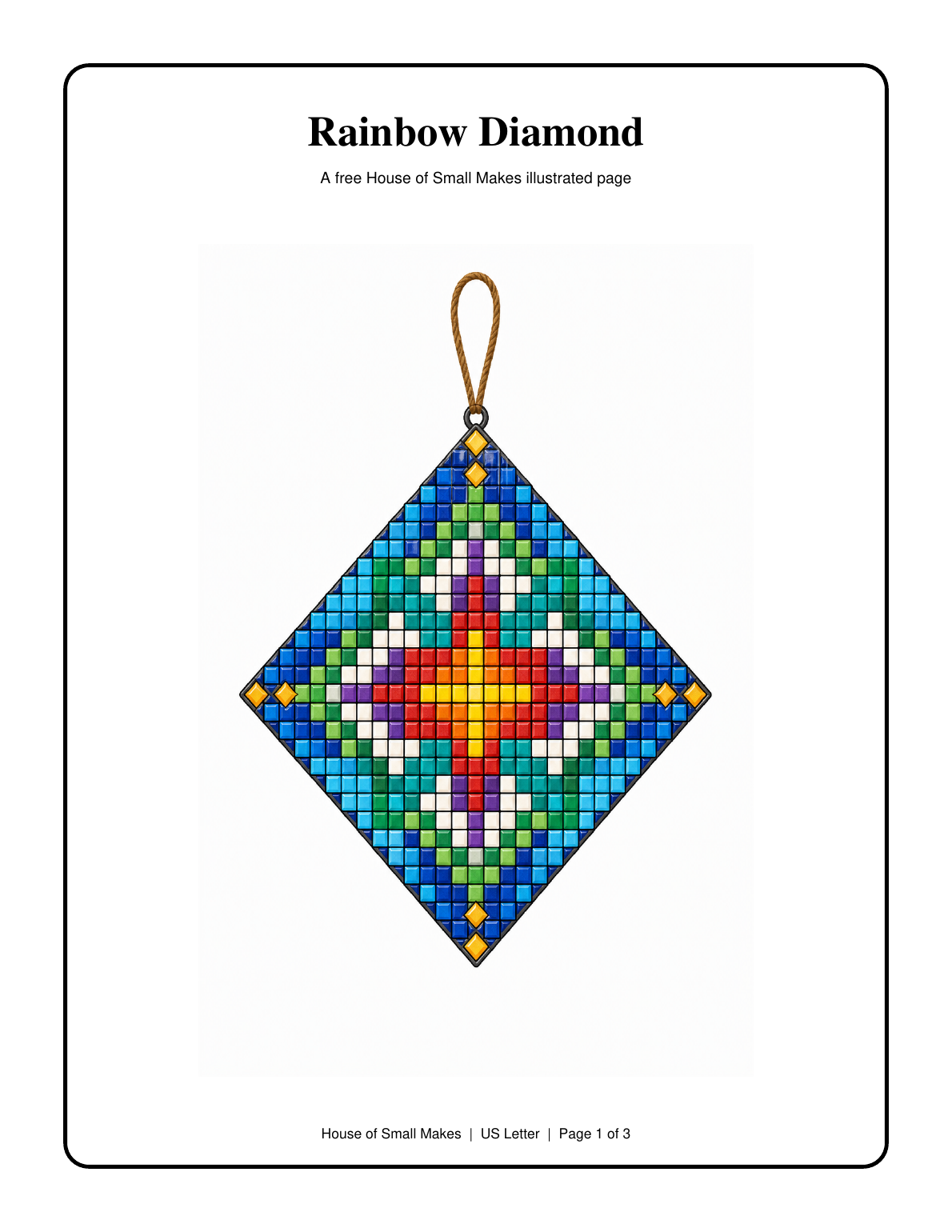
Pony bead tapestries look like pixel art, but starting without a clear counted grid can feel like guessing where each color goes. These three illustrated grid pages give you a calm place to plan colors and count rows before you thread. Free Pony Bead Tapestry Patterns: 3 Grid Pages to Make includes a Rainbow Diamond, Butterfly and Mushroom, each drawn one bead per cell on a regular grid. The pages are designed to be printed on US Letter paper and used as a visual guide while you work row by row.
Free Pony Bead Tapestry Patterns: What you get
A 3-page US Letter PDF (8.5 × 11 inches).
- Rainbow Diamond
- Butterfly
- Mushroom
Download the free US Letter PDF
Supplies
- Pony beads in a limited palette of five to eight colors
- Strong beading cord that passes easily through the bead holes
- Tapestry needle or a fine beading needle
- Scissors
- Small wooden dowel for hanging
- Printed grid pages from the PDF
- Graph paper or a pencil for notes and color planning
- Small tray or bowl for sorting beads by color
How to use it
- Print the three grid pages on US Letter paper. Choose Actual Size or 100% in your print dialog so the grid cells stay true to the page layout. If you prefer to work from a single motif, print only that page.
- Sort your pony beads into color groups before you begin. A small tray or bowl for each color keeps the palette visible and makes it easier to follow the grid without stopping to search.
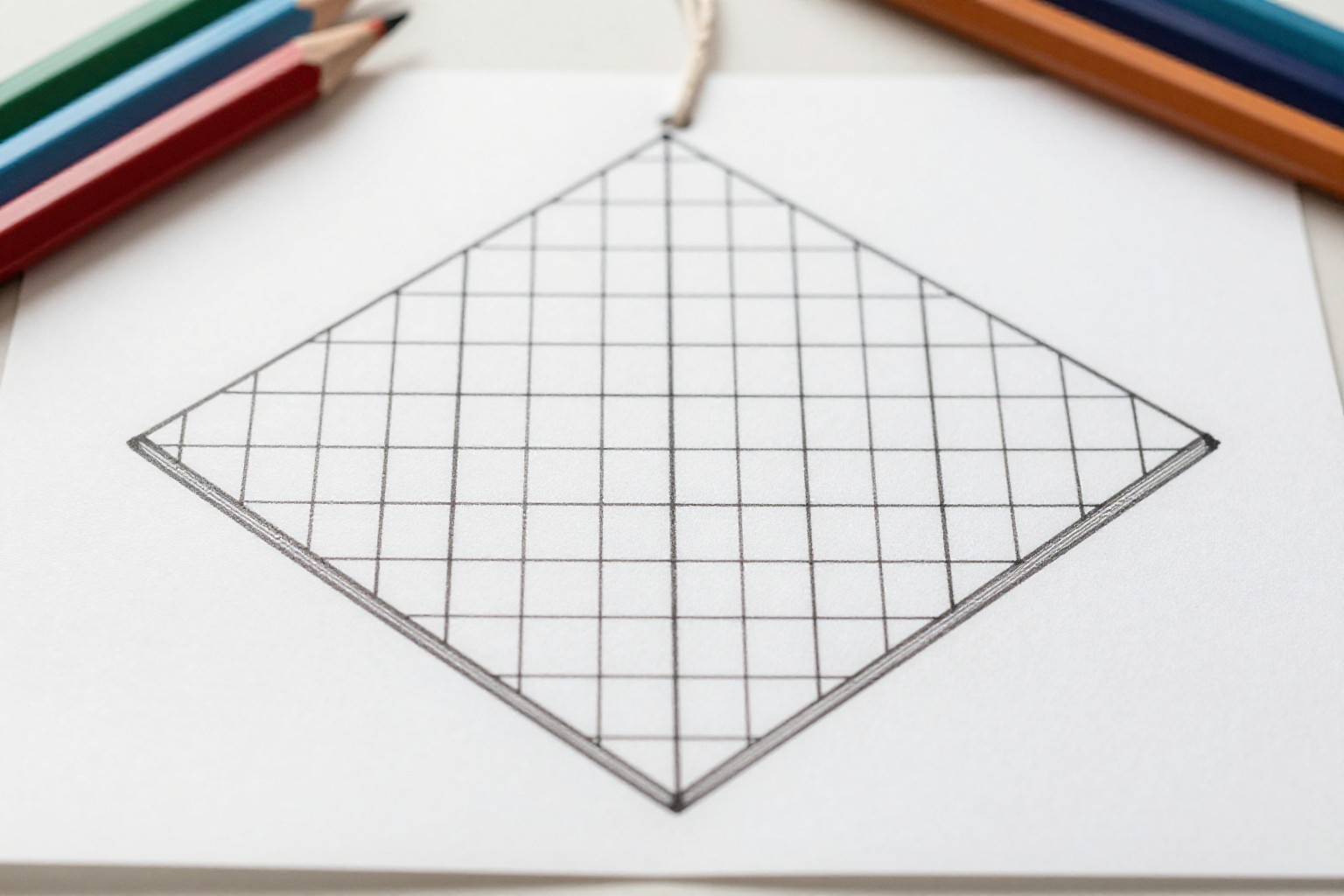
- Choose one motif to start: Rainbow Diamond, Butterfly or Mushroom. Each page shows a centered design with visible grid lines and individual bead cells. Use the grid as a visual guide for color placement and row counting.
- Plan your colors directly on the printed page. Lightly mark or annotate the cells with your chosen bead colors so you can see the full palette before threading. This is especially helpful for the Butterfly, where two mirrored wing sections and a narrow body column meet.
- Set up your cord and needle. Cut a length of strong beading cord that gives you comfortable working room, and thread your needle. Keep the cord slightly loose while you work so the finished panel can settle naturally instead of becoming stiff.
- Thread row by row, following the grid from one side to the other. For the Rainbow Diamond, keep every row symmetrical; even one misplaced bead can make the diamond look crooked. For the Butterfly, build the mirrored wings and the center body column one bead per cell. For the Mushroom, work the rounded cap, short stem and small leaf shapes at the base, leaving the background space around the motif open.
- Check your tension as you go. Consistent, slightly relaxed tension helps prevent uneven rows and curling. If a row feels tight, gently ease the cord before adding the next bead.
- Once the panel is complete, finish the ends. Knot the cord securely, trim excess, and attach the panel to a small wooden dowel for hanging. A short cord loop above the panel works well for the Rainbow Diamond; the Butterfly and Mushroom can hang from the dowel in the same way.
- Hang your finished tapestry against a wall and step back to check the symmetry and color balance. If you plan to make another, keep the printed grid beside you as a reference for the next colorway.
Helpful notes
- If your rows start to curl, the tension is likely too tight. Ease the cord slightly and continue with a more relaxed hand; the panel should lie flat when finished.
- To keep the grid readable while you work, slip the printed page into a clear plastic sleeve or clip it to a small board. This protects it from loose beads and lets you mark colors with a dry-erase marker.
- If you want to adapt a motif to a different size, use the grid as a guide and redraw it on graph paper, scaling the cells up or down. Keep the same one-bead-per-cell approach so the shape stays clear.
- Pony beads are small parts and can be a choking hazard. Keep them away from children under three, and supervise older children closely. Adults should handle sharp scissors, tight knots and wall-hanging hardware.
- If you are choosing between the three pages, pick the motif that matches the drawing control and color confidence of the maker. The Rainbow Diamond is built from stacked rows and is easy to check for symmetry; the Butterfly and Mushroom have more distinct shape sections to follow.
Review the PDF at actual size before using it.